

If you’re considering moving to the Raleigh area, and you’re choosing between the bigger city of Raleigh or the nearby smaller town of Cary (15 minutes to the west of Raleigh), there’s more to ask yourself than city vs town. Raleigh isn’t simply “the city,” while Cary is “the suburb”; both have evolved far beyond those simple labels.
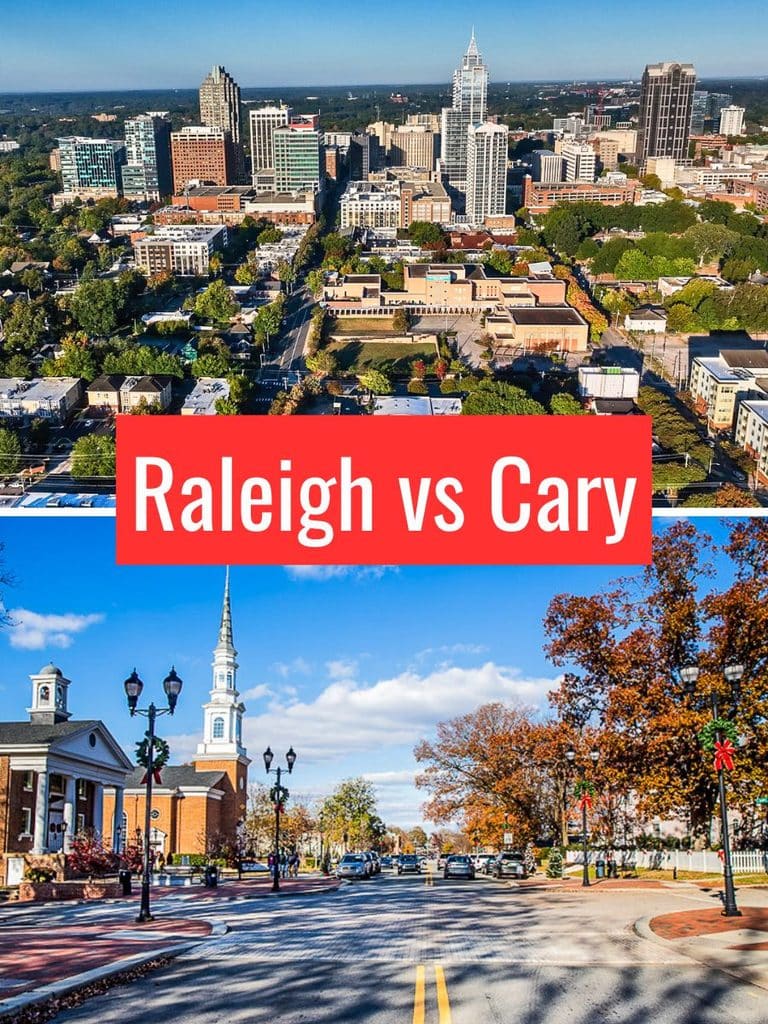
We have lived in both Raleigh and Cary, and we can tell you there are just as many differences as there are similarities. On a map, the choice hardly seems like a choice at all. Downtown Cary is only a 15-minute drive from downtown Raleigh, close enough that the two communities share the same airport, job market, weather, and many of the same attractions. From the outside, they can feel like two parts of the same city. However, they vary in house price, family-friendliness, recreational offerings, schooling, and much more!
So, which is better? That depends on what you want your everyday life to look like. So, to help you get an idea of what that might be, we’ve put together this comparison of Raleigh vs Cary, so you can make an informed decision about which place speaks to you the most.
Raleigh vs Cary: At a Glance
Job Market and Average Income
- Raleigh – Has a larger and more diverse employment market, with particularly strong opportunities in technology, healthcare, government, and education.
- Cary – Has a smaller local job market, but its close proximity to Raleigh and Research Triangle Park puts it in a great position for those working in technology, healthcare, or life sciences. Has the lowest unemployment rate in the state.
Housing Market
- Raleigh – More housing options across a wider range of neighborhoods, housing types, and price points, and lower rent prices.
- Cary – More expensive to buy and rent than Raleigh and a far smaller inventory to choose from, but could be seen as an investment.
Cost of Living
- Raleigh – Generally more affordable for groceries, but more expensive for restaurants.
- Cary – Cost of living is not dramatically higher than Raleigh, but it is largely due to higher housing costs.
Lifestyle and Entertainment
- Raleigh – Has a more urban, youthful energy, with a wider selection of museums, music venues, nightlife options, sports arenas, entertainment venues and theaters, and cultural attractions.
- Cary – Has a quieter and more polished vibe, but far from boring. It has a growing downtown packed with restaurants, bars, and community events taking place in parks and the Cary Arts Center. Some breweries and bars have regular entertainment throughout the week, such as live music or trivia nights.
Crime and Safety
- Raleigh – Safety varies depending on the neighborhood, but it is generally considered a safe city overall.
- Cary – Has a lower crime rate than Raleigh in terms of violent crime and was ranked #6 Safest Cities in America by Forbes. Overall, it has a strong reputation for safety.
Education
- Raleigh – Excellent access to Wake County schools, charter schools, private schools, and NC State University.
- Cary – Access to Wake County schools. Cary High School has a graduation rate of 87%.
Airport and Travel
- Both have convenient access to Raleigh-Durham International Airport (RDU), with downtown Raleigh roughly 15–20 minutes away in light traffic. Cary is arguably slightly better positioned for RDU, particularly from western Cary, although rush-hour traffic can make it challenging to get to RDU from either direction. Essentially, they are the same.
Healthcare
- Raleigh – Excellent access to major hospitals and medical specialists, including Duke University Hospital, UNC Health, and WakeMed facilities throughout the Triangle.
- Cary – Has strong local healthcare options at WakeMed Cary Hospital and easy access to the wider Triangle’s world-class medical opportunities.
Weather and Climate
- They have the same climate. You’re only about 10 miles apart, after all.
Outdoor Recreation
- Raleigh – Has plenty of greenways, parks, and lakes within its city limits, and has beautiful nature sites just outside, such as William B. Umstead State Park and Falls Lake.
- Cary – Also has an extensive greenway network and is closer in proximity to Hemlock Bluffs Nature Preserve, Lake Wheeler, and Jordan Lake.
Family friendliness
- Raleigh – Family-friendly in many neighborhoods, but is a diverse city that attracts all lifestyles and styles of urban living.
- Cary – Cary shines as a family-friendly town. It has excellent schools, is safe, has plenty of playgrounds and parks, family-friendly community events, quieter neighborhoods, and a strong community feel.
Future development and growth
- Raleigh – Raleigh is known for its continued population growth, major development projects, and investment in new housing, businesses, and generally reshaping the city.
- Cary – Although a small downtown, Cary sprawls to a wide area and continues to grow, but at a slower rate than Raleigh. Its focus is on redevelopment and strategic infill because less than 14% of the remaining land is developable.
Job Market

Raleigh and Cary generally share the same job market as they are both close to the Research Triangle Park, so those working in pharmaceuticals, technology, biotech, CleanTech and sustainability etc will have plenty of job opportunities open to them. The RTP has over 300 companies operating in its facilities and employing, on average, 42,000+ people, with an average annual salary of $140,000 p.a.
Outside of the RTP, the job market is quite different. Raleigh, as the state capital and the region’s largest city, has a particularly diverse employment base. Outside of technology, it has a healthy job market in the government, healthcare, education, and finance sectors, as well as hospitality and retail. Some of the largest employers in Raleigh are WakeMed Health & Hospitals, IBM (International Business Machines), Fidelity Investments, Lenovo, and Cisco Systems.
Cary also has a healthy job market, with the biggest employer being SAS Institute Inc. Some other major employers in Cary are Epic Games, Deutsche Bank, American Airlines, LORD Corp., Verizon, John Deere, Kellogg’s, and Siemens. Cary also has one of the state’s lowest unemployment rates at just 3.0% NC Department of Commerce. Another attraction to Cary’s job market is the salaries. The job market is geared towards more educated and skilled workers, so average salaries tend to be higher. The average salary in Raleigh is $82K per year, and in Cary, the average salary is $93K per year.
Ultimately, the job market differs depending on what kind of career you want. Raleigh has more flexibility, but Cary has more high-income, professional roles. And being located so close, you can obviously live in Cary and commute to any job in Raleigh.
Housing Market
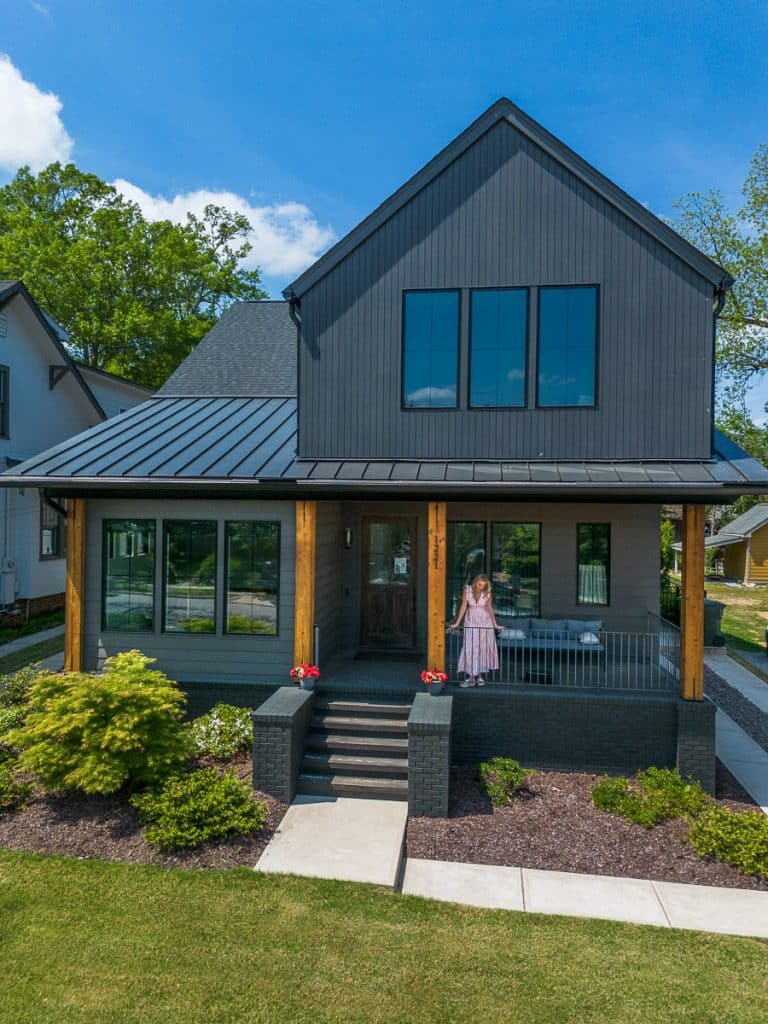
Raleigh and Cary are close neighbors, but their housing markets are different. Raleigh has a larger inventory of single-family homes, apartments, and townhouses on the market, whereas Cary’s property market is smaller and largely centered around premium, highly desirable suburban neighborhoods.
As of July 2026, the housing market in Raleigh puts average home values at $435,000+, compared to $628,000 in Cary. Raleigh is generally more affordable, but the neighborhood is important, so while there is a lot to choose from, you have to filter out your options a fair bit to find something that fits your needs.
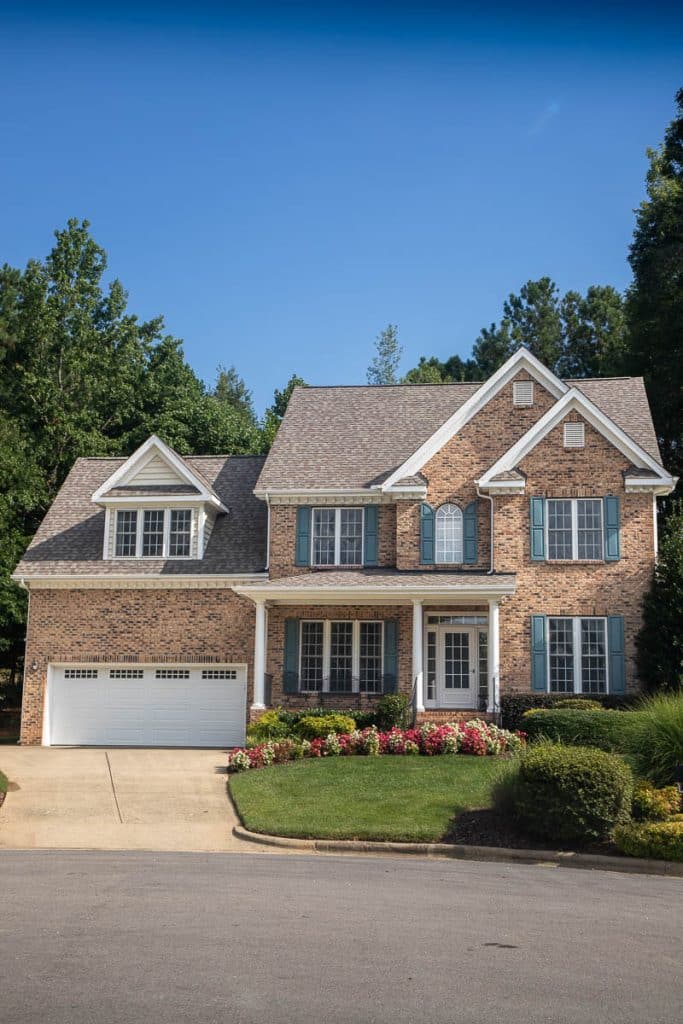
Cary is also the more competitive market. Homes in Cary typically only spend around 25 days on the market, compared with roughly 39 days in Raleigh. As I said, it’s an investment to live in Cary, so you need to be prepared to move fast if you like a place. If you’re renting over buying, Raleigh has the upper edge. Zillow’s September 2026 figures show average rents of about $1,800 in Raleigh versus $2,100 in Cary, making Raleigh the more budget-friendly option.
NOTE: If you need help finding a local realtor here in the Raleigh area, we can connect you with our trusted realtor partner we have personally vetted and will take great care of you. Click to learn more.
Cost of Living
Living in Raleigh and Cary are fairly similar when it comes to cost of living, with housing prices pushing Cary into the higher end of the scale in that regard. Because they share the same metro area, the same state tax structure, similar utility needs, and many of the same grocery stores, restaurants, healthcare providers, etc, the difference you pay on overall living is marginal, at best. Independent data by Numbeo estimates that Raleigh’s restaurants are more expensive by 9.4%, but groceries are cheaper by 13.1%. Your lifestyle also plays a big role in how much your cost of living will be.
Lifestyle and Entertainment

I would say the lifestyle is where Raleigh and Cary have the biggest difference. Raleigh is the more energetic, eclectic choice, with a wider variety of things to do for people of all age groups and lifestyle choices. It has more restaurants, museums, live music venues, breweries, and cultural attractions, and nightlife tends to be more student-focused, with bars and clubs on Glenwood Avenue offering opportunities for people to dance until the early hours.
Downtown Raleigh alone has a host of entertainment offerings, from museums, performing-arts venues, music venues, and bars for all vibes – whether you prefer the elegance of speakeasies and rooftop cocktail bars or dingy dive bars, you can find it all in downtown Raleigh.
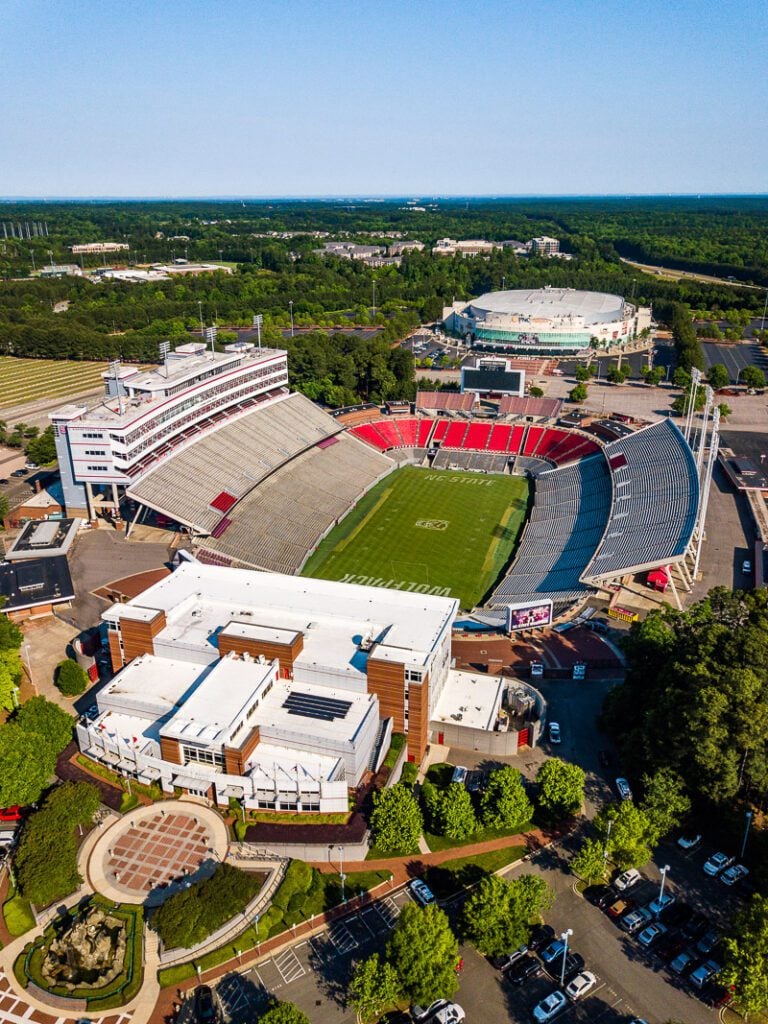
Raleigh also has a thriving arts scene, and a high-energy sports scene. College football is huge here, with the NC State University’s Wolfpack team playing at Carter-Finley Stadium, which can seat over 56,000 people.
Cary is quieter, but it is no longer the sleepy suburb it once was. Downtown Cary has charm and a nice variety of restaurants, shops, and community events, and some iconic taprooms, bars, and breweries keep the events calendar full of trivia nights, live music, and other events throughout the week.
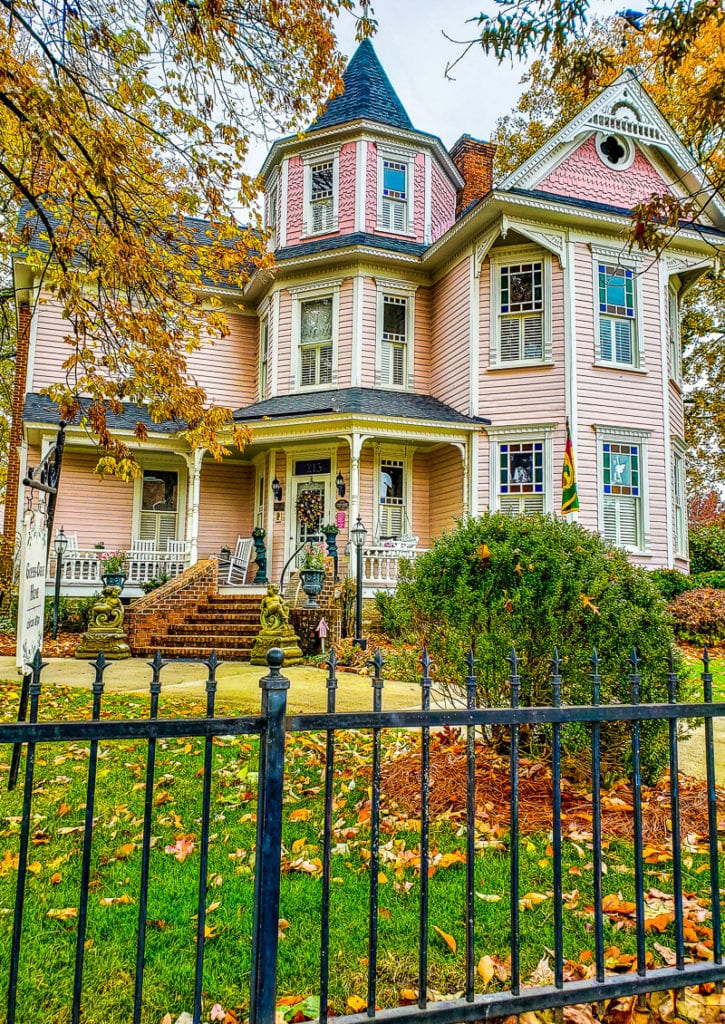
Cary is also home to Koka Booth Amphitheater, a 7,000-seat outdoor venue that has a thriving calendar of events, including national and global touring artists. Soccer is a big thing here, with NC Courage matches taking place at WakeMed Soccer Park during the sporting season.
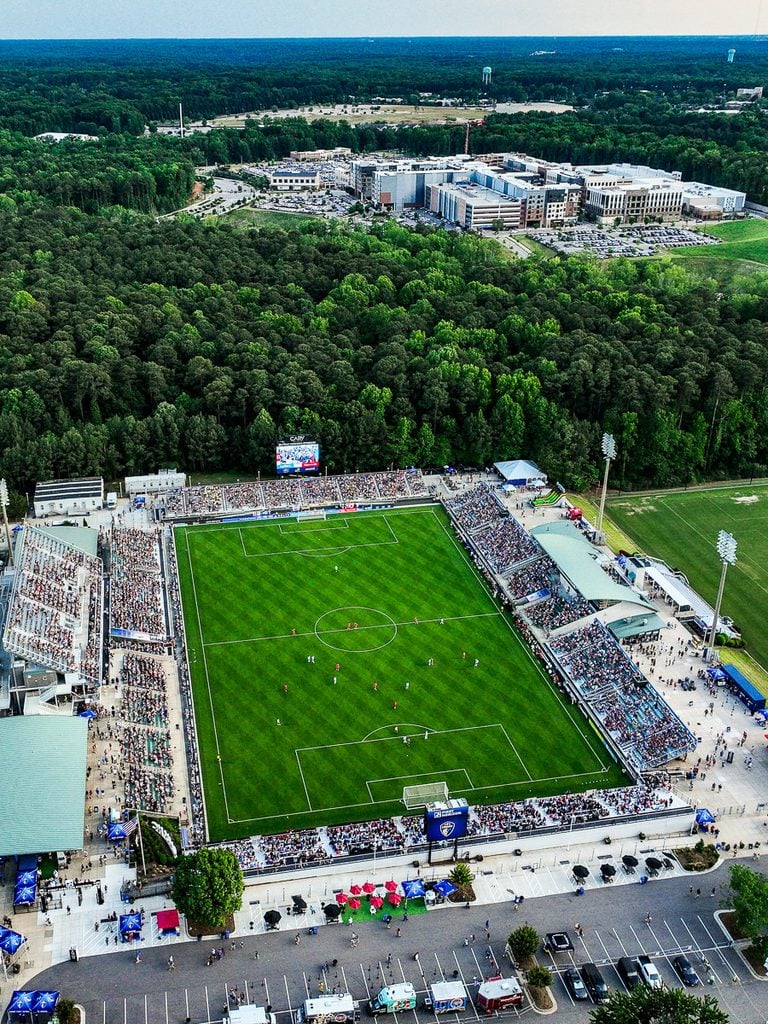
Cary’s entertainment tends to be more polished and family-oriented, rather than trying to compete with Raleigh’s downtown nightlife, but you will find that both cities offer an attractive outdoor-focused lifestyle to those who crave it.
Crime and Safety
Both Raleigh and Cary report low crime rates on average. Raleigh’s violent crime and property rate is falling each year. In 2025, violent crime fell by 1% and property crime fell by 17%. Neighborhood matters enormously in Raleigh, as crime rates can vary considerably depending on where you base yourself. Someone living in a quiet suburban neighborhood in northwest Raleigh can have a very different day-to-day experience from someone living near downtown nightlife districts.
Cary has a long-standing reputation for being a safe town, and it is one of the biggest reasons families and higher-income households choose to live there. Cary is relatively affluent and is a master-planned suburban community, so violent crime is rare, but property crime such as burglary and vehicle theft is more common. Cary Police Department’s 2024 annual report says the town’s violent-crime rate remained well below both North Carolina and national averages. As of 2025, Cary’s crime rate is 33% lower than the national average.
Education

Raleigh and Cary are part of the Wake County Public School System (WCPSS), one of the largest school districts in North Carolina. That means the distinction isn’t really between two different school systems, but rather which schools, programs, and educational opportunities you are closer to within the district.
WCPSS has enrollment caps to limit overcrowding, so the school your kids attend will be the closest one by default. When moving to a new area, you may have to send your children to an overflow school while you wait for your closest school to have available space. This is an issue you may face whether you choose Raleigh or Cary, so don’t let it put you off moving to the Triangle altogether. This can also be an advantage if you plan on buying a house, as you’re not simply buying a house; you’re often buying into a particular school zone and the surrounding community.
In terms of finding the right school, Cary has a particularly strong reputation for public schools. Cary High School, for example, has an 87% graduation rate, while Wake County’s overall graduation rate reached 90% for the 2025-26 school year.
Raleigh has more variety when it comes to traditional public schools, magnet programs, charter schools, and private schools, and several high schools in Raleigh also offer specialized programs, including the International Baccalaureate program. Raleigh is also home to major higher-education institutions including NC State University, Meredith College, and Shaw University, but people living in Cary can have access to them; you’re just further away by distance. Read more: Understanding the Wake County Public Schools System in Raleigh
Airport and Travel

When it comes to air travel, Raleigh and Cary are both extremely well positioned because they share the same access to Raleigh-Durham International Airport (RDU). RDU is located about 11 miles northwest of downtown Raleigh and 7.3 miles from downtown Cary. The only difference is how easily you can get onto the major roads leading to the airport, which largely depends on where you base yourself in either place – so it’s apples and apples on this one.
And if you are someone who values their vacations or takes regular business trips, RDU has an impressive range of nonstop flights. It serves 19 airlines and has more than 400 daily flights, with nonstop services to most U.S. cities, including the main hubs such as New York, Chicago, Atlanta, Dallas, Los Angeles, San Francisco, and Seattle, as well as international destinations including London, Paris, Frankfurt, Dublin, Reykjavik, and Mexico City.

When it comes to getting around, both Raleigh and Cary are driving locations. The roads are well maintained, and there’s plenty of parking. There is also a well-maintained cycling infrastructure in both cities, thanks to the greenway trails. You can rent Lime Bikes in Raleigh, but it’s not currently operating in Cary, so you would need your own bike if you were to cycle in Cary.
Also, it’s worth noting that both Raleigh and Cary are on the Amtrak network. You can board Amtrak from Raleigh Union Station in downtown Raleigh and Cary Station in downtown Cary.
Healthcare
The good news is that both Raleigh and Cary have excellent healthcare, though Raleigh has the advantage of sheer depth of options. Fortunately, you don’t need to live in Raleigh to have access to WakeMed, Duke Health, and UNC Health, but living in Raleigh puts you closer to the more major hospitals and specialized services located within the city.
Raleigh has three major healthcare providers: WakeMed Raleigh Campus, UNC Health Rex, and Duke Raleigh Hospital, which offer a Level I Trauma Center, Children’s Hospital, neonatal intensive care, comprehensive heart services, stroke centers, and more options for advanced surgical care. Cary has one full-service hospital, WakeMed Cary Hospital. It’s a 208-bed facility that offers 24/7 emergency care, surgery, intensive care, cardiovascular services, cancer-related care, maternity services, and other specialties. It is also home to a Level III Trauma Center.
Weather and Climate

Another apples and apples comparison. These two locations are 15-minutes from each other, and so they have the same weather and climate. The Triangle has a humid, subtropical climate, so you’ll get a four-season weather pattern. They have hot, humid summers and relatively mild winters, rarely with winter storms.
Because of the thriving population of hardwood trees such as pine, oak, maple, and birch, the pollen count in the spring and summer is higher than the national average. Every year, visible yellow dust can be seen coating the cars and porches, and so if you suffer from allergies, this may put you off moving to the Triangle.
Another thing to keep in mind when living in the Triangle area (Raleigh-Durham-Chapel Hill) is that severe weather, such as thunderstorms and hurricanes moving across the Atlantic, can affect the region here. Typically, Raleigh and Cary haven’t seen major widespread damage from hurricanes since Hurricane Fran over 30 years ago, but flooding, wind damage, and heavy rain can sometimes cause property damage.
Outdoor Recreation

If outdoor recreation is important to you, both Raleigh and Cary are excellent places to live. Raleigh has the slight advantage in that it’s larger, so it has more natural sites within its city limits, and its position puts you closer to larger natural areas just outside, such as William B. Umstead State Park and Falls Lake State Recreation Area. It also has many lakes and parks within its city limits, so you are never too far away from a nature spot. We love walking around Lake Johnson, which is just off the NC State University campus.
Raleigh has between 100 and 120 miles of paved greenway trails and connects to the larger Mountains to Sea Trail. Cary also has miles of greenways, which are largely built to connect services such as parks, schools, shopping centers, and businesses, so cycling can become part of everyday life when living here. It also connects to a segment of the famous American Tobacco Trail.

Cary doesn’t have as many parks or nature spots within its limits, but the fantastic Fred G. Bond Metro Park is a great urban park with a lake, trails, and an athletic field. It’s also near Jordan Lake State Recreation Area, one of the few lakes in the Triangle you can swim in, and Hemlocks Bluff Nature Reserve.
The bottom line is Raleigh has the slight edge for hikers, and those who love getting out on the lake in a kayak or SUP, but Cary is a great choice for cyclists.
Family Friendliness

Both Raleigh and Cary are family-friendly, but I would say Cary has a slight edge over Raleigh on this one, purely because Raleigh attracts a wider variety of people and so some neighborhoods are more family-friendly than others, but with Cary, it doesn’t really matter where you base yourself. Everywhere is family friendly.
The difference is purely down to the overall environment. Cary was largely built around planned suburban living. It has a strong public-school network, extensive parks and greenways including the fantastic Downtown Cary Park, and community events geared towards families and people who prefer a quieter life. Raleigh offers many of the same advantages, but it varies from one neighborhood to another.


I’m not saying Raleigh isn’t family-friendly; there are plenty of things in Raleigh for families. The city has more than 200 parks with playgrounds, splash pads, and athletic fields, and a wide variety of schools. It also has family-forward attractions such as Marbles Kids Museum, the incredible Gypson Play Plaza at Dix Park, and fabulous Pullen Park, so when it comes to doing things, Raleigh wins based on variety, but in terms of overall living, Cary has that suburban, family-focused feel where you’d feel comfortable letting your children play ball games in the street.
Future Development and Growth
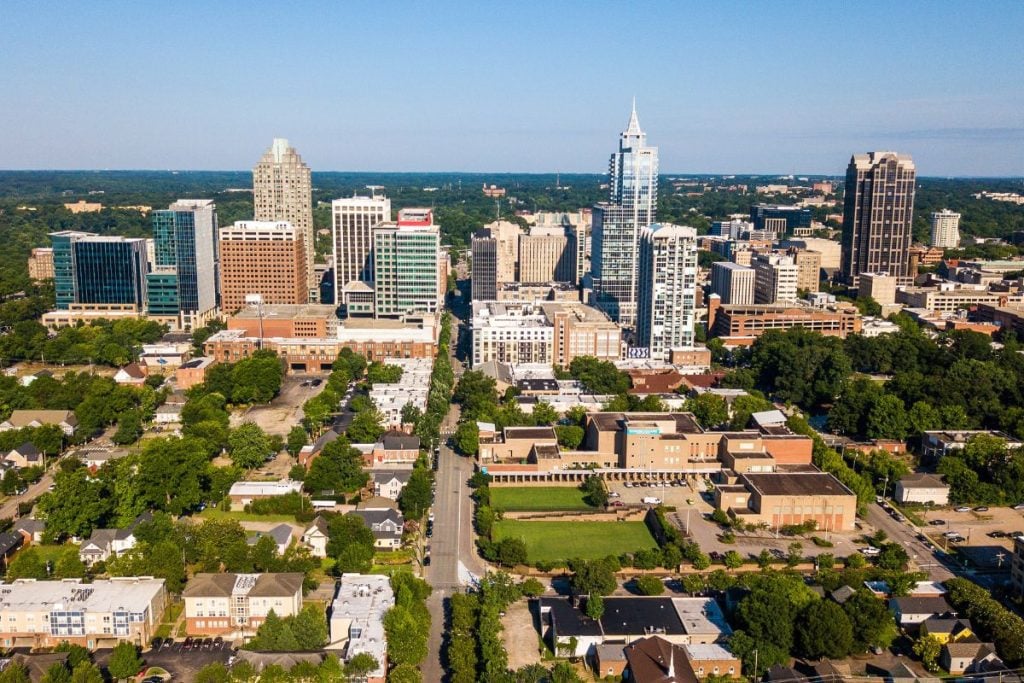
It’s always important to think about where a place is heading before moving there. After all, you don’t want to move somewhere where everyone is leaving, or do you? Fortunately, both the city of Raleigh and Cary are growing destinations, but at very different rates.
Raleigh is well known as being one of the fastest-growing metropolitan areas in the country, with 2026 data showing an increase of roughly 1.61% (lower than previous years, but still growing). The city has a comprehensive plan to keep pushing growth, prioritizing housing choices and planned neighborhoods, improving transportation, sustainable development, and infrastructure.
Cary, on the other hand, is growing, but it has limited land to develop on, so growth is slow and somewhat limited. According to 2025 reports, Cary has 14% of developable land left (realistically 10% due to environmental regulations), so development is focused on redevelopment rather than new developments. It may seem like a downside, but it does mean that purchasing a property here is an investment.
P.S. Don’t forget that if you need help finding a local realtor here in the Raleigh area, we can connect you with our trusted realtor partner we have personally vetted and will take great care of you. Click to learn more.
More city comparisons:
Stay Connected to Raleigh
Join our free email community to receive free checklists, guides, insider tips, personal stories, fun finds, and the best events in Raleigh each week. We'll show you how to stay connected to Raleigh and love where you live! Join Below 👇
“Your weekly newsletter is a lifesaver for me. Yesterday we didn’t know what to do, I just check your list of events for the weekend, and we ended up in Cary at the Carolina Circus Festival. We had a great time so thanks a lot for all your good work 😊 we really appreciate you” Subscriber
