

The perfect place to jaunt on a beautiful spring day is through the gorgeous Sarah P. Duke Gardens in Durham, which are located in the heart of the West Campus of Duke University. If you love gardens and being out in nature, they are one of the premier public gardens in the USA, and entry is FREE!
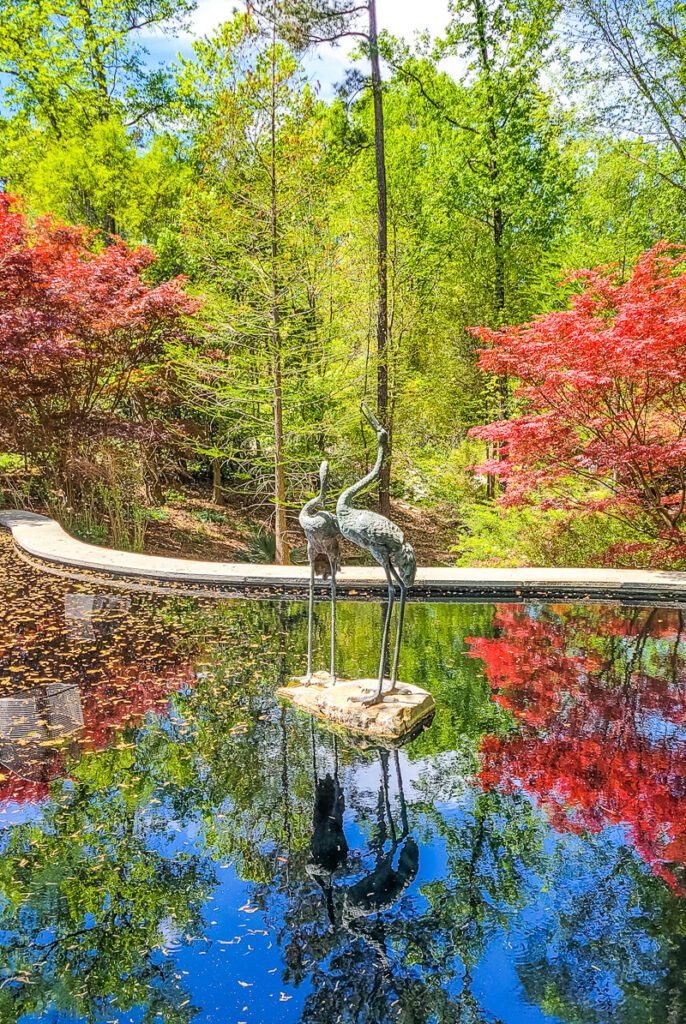
At Duke Gardens you can explore 55-acres of beautiful landscaped gardens. There are over four themed sections, including a large central terraced garden, wooded areas, fountains, artistic sculptures, gazebos, pathways, bridges, grassy areas, and more than 2,500 colorful plant species (local and exotic) with helpful signage for identification.
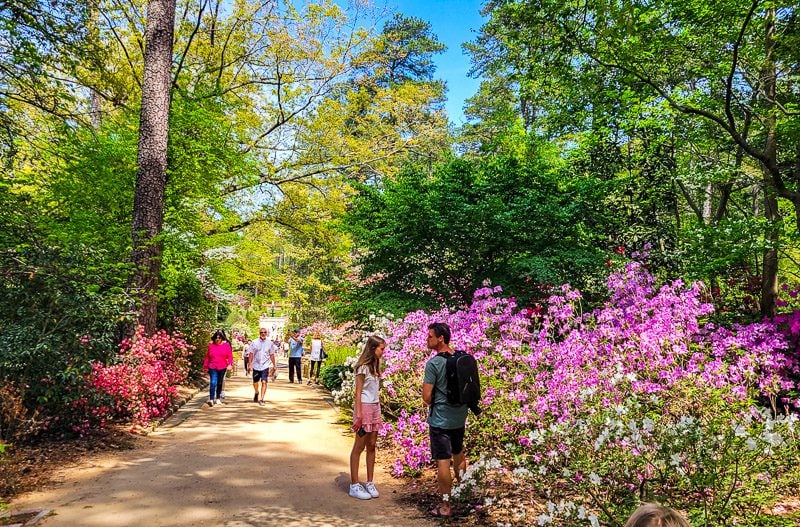
If you’re looking for day trips from Raleigh, Duke Gardens are an easy and convenient choice, and well worth the 30-minute drive! Here’s everything you need to know to plan your visit…
- About Sarah P. Duke Gardens
- Things to see at Duke Gardens
- Getting to Duke Gardens from Raleigh
- Parking at Duke Gardens
- Places to eat near Duke Gardens
- Other things to do near Duke Gardens
- FAQs about visiting Duke Gardens
- More Gardens To Love in Raleigh
About Sarah P. Duke Gardens
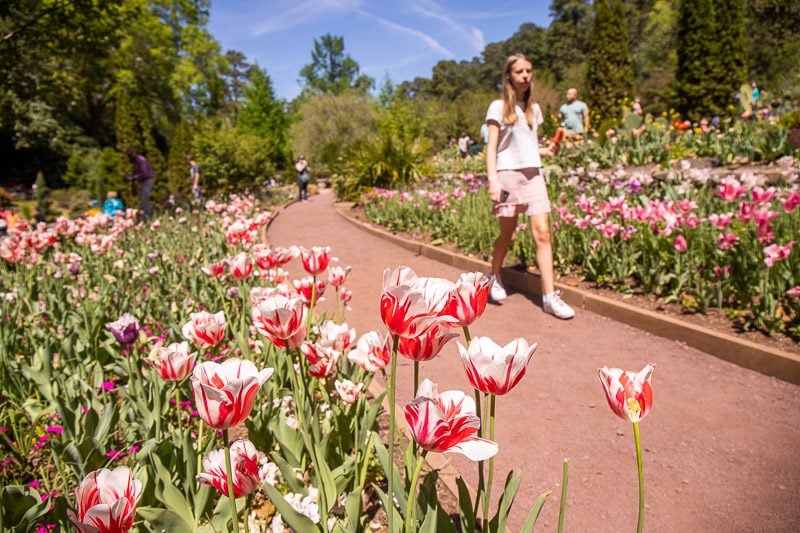
Over 600,000 visitors per year from around the world visit Sarah P. Duke Gardens, which is open 365 days of the year from 9 a.m. to 7 p.m. (March-October) and 9 a.m. to 5 p.m. (November-February) with free admission. In total, it spans 55 acres of landscaped and wooded areas, as well as 5 miles of allées, walks, and pathways throughout the gardens.
At Duke Gardens, they create and nurture an environment for learning, inspiration and enjoyment through excellence in horticulture and community engagement, plus horticultural artistry, leadership in conservation, and innovative programs and plays a vital role in the life and values of Duke University.

These gardens have been serving the Duke and Durham communities for more than 80 years. It was founded by Sarah P. Duke, widow of one of the university’s founders (Benjamin N. Duke), who gave $20,000 to finance a garden that would bear her name.
However, the idea of a public garden arose in the early 1930s due to the vision and enthusiasm of Dr. Frederic M. Hanes, an early member of the original faculty of Duke Medical School. Duke Gardens features four distinct areas:
- The Historic Gardens
- H.L. Blomquist Garden of Native Plants
- W.L. Culberson Asiatic Arboretum
- Doris Duke Center Gardens
Things to see at Duke Gardens
Start your visit at the Anderson St entrance, where the Doris Duke Center (and Terrace Gift Shop) is located. This center is currently closed for renovation, but the new addition of the Barnes Welcome Center is open and where you can pick up a map and learn how you can plan your exploration through the various gardens.
Barnes Welcome Center
From the parking lot, you will first come to the Barnes Welcome Center, a new addition to Sarah P. Duke Gardens as part of the Garden Gateway Project (opened in April 2026) and is the official entrance to the gardens.
The Welcome Center has a visitor lobby with maps and guides on hand to recommend things to see and point out seasonal highlights. There is also an enclosed gallery space and classrooms which have educational programs and community events to enjoy, as well as a cafe and gathering space.
After visiting the Welcome Center, walk through the Gothic Gate and down the pathway known for its vibrant Akebono cherry trees and head towards the Roney Fountain and Historic Gardens, or venture to any of the other themed areas of your choosing – the Duke Gardens map is easy to follow!
The Historic Gardens

The Historic Gardens are where Sarah P. Duke Gardens began in 1934, with an iris garden in what is now the South Lawn.
Highlights
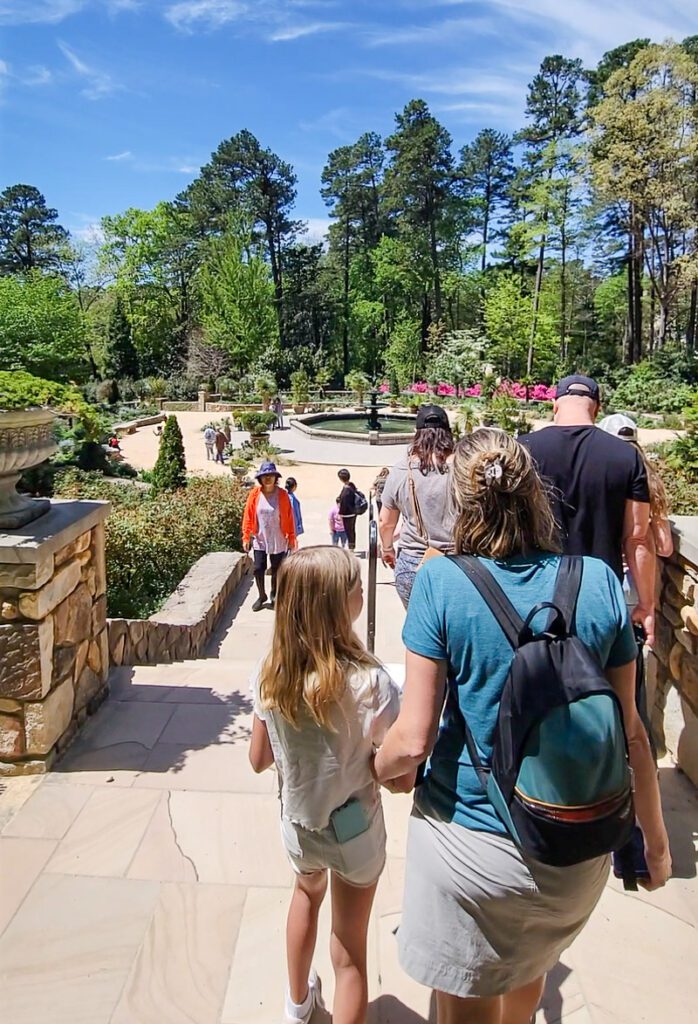
Rose Garden and Roney Fountain
The Mary Duke Biddle Rose Garden features heirloom roses set among annuals and perennials. In the center of the Rose Garden is the more than a century old Roney Fountain that was donated to Duke University in 1897 by Anne Roney, sister-in-law of Washington Duke.
Terrace Gardens
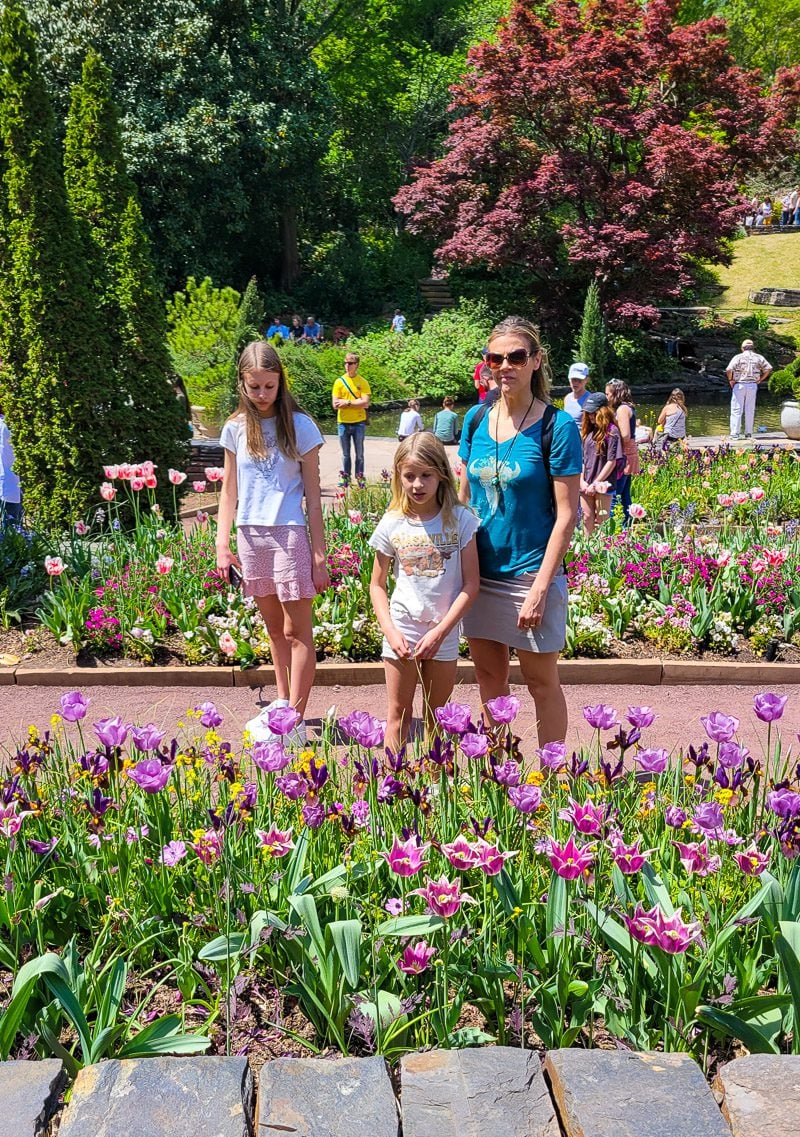
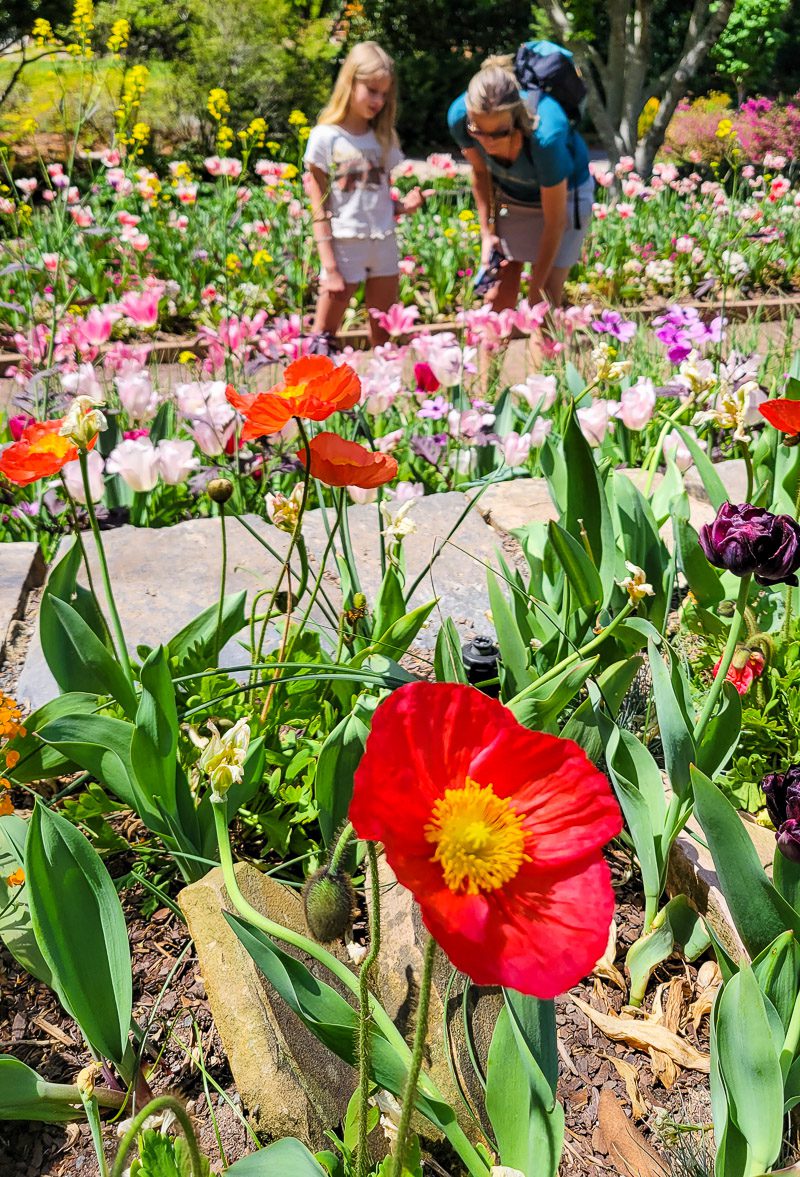
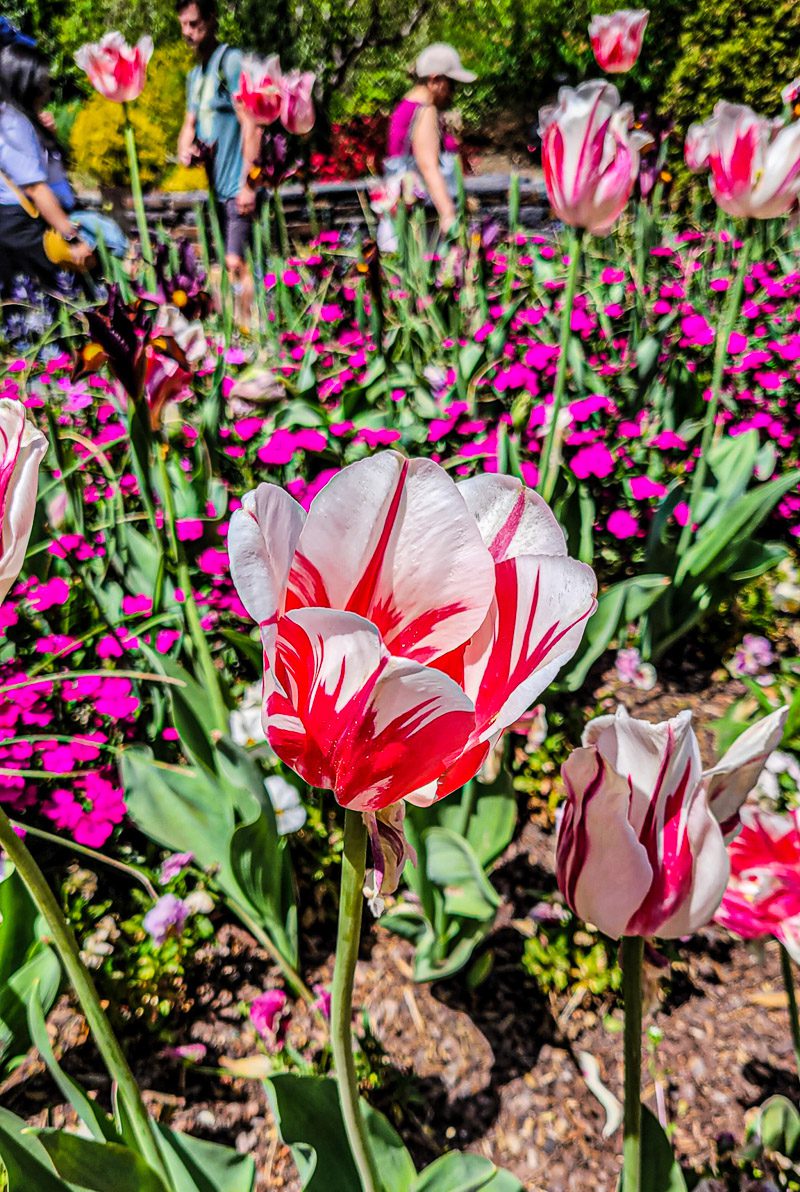
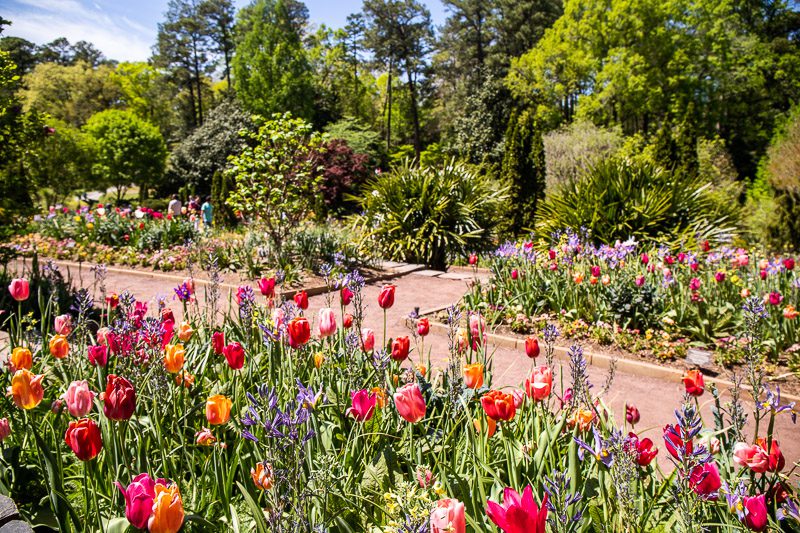
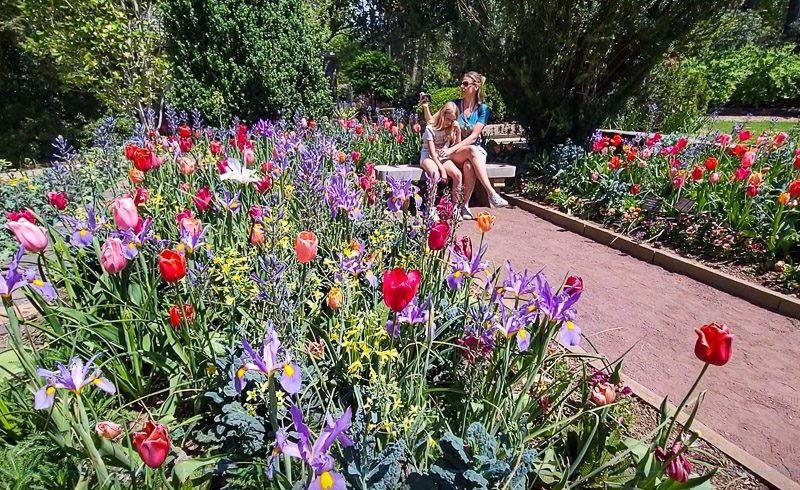
of the most popular destinations in Duke Gardens and topped by a 75-year old wisteria-covered pergola. The Terrace Gardens’ beds are filled each season with beautiful combinations of bulbs, annuals, perennials, ornamental grasses, trees and shrubs, and each April people visit to enjoy the dazzling display of bulbs, cherry trees and the Pergola’s iconic wisteria.
Victoria water lilies and koi
In the pool, koi and goldfish are popular with visitors, especially the kids. And in the summer, the fish pool is filled with hardy and tropical water lilies – the Victoria water lily has leaves up to 7 feet wide.
W.L. Culberson Asiatic Arboretum
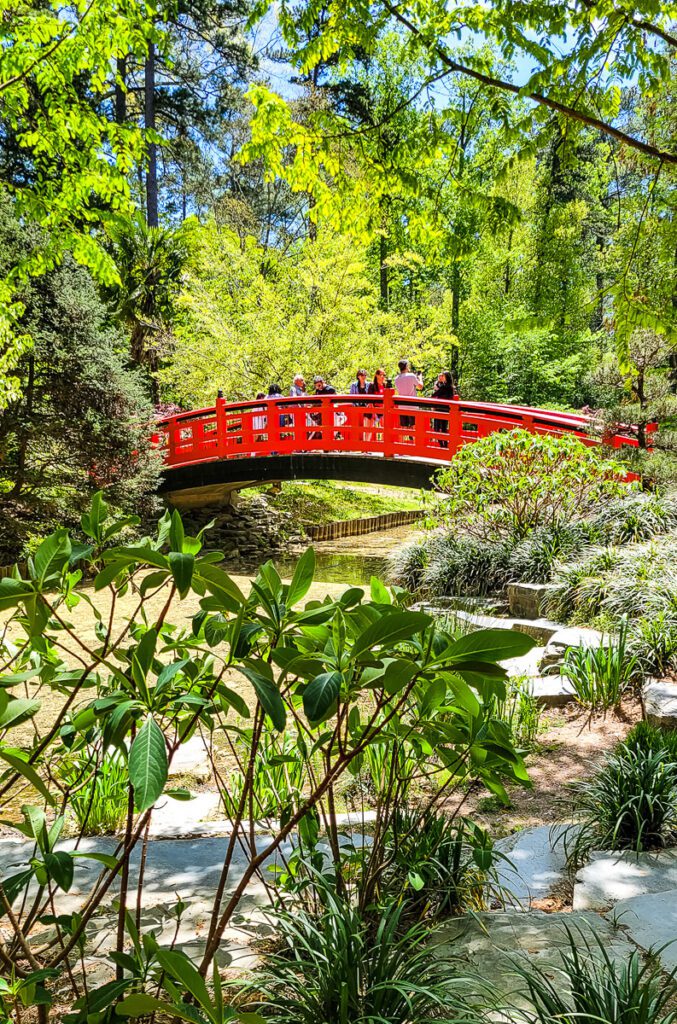
Named for Duke Professor and former Duke Gardens Director William Louis Culberson, the Asiatic Arboretum is an 18-acre collection of plants representing the wealth of floral diversity in Southeast Asia such as Japanese maples, irises, peonies, ginger lilies, and cherries. You’ll also discover steppingstone pathways, stone lanterns and water basins, arched bridges, large boulders, and water features. Highlights of the W.L. Culberson Asiatic Arboretum include:
Durham-Toyama Sister Cities Pavilion and Garden

A small, refined garden pavilion that functions as a venue for chanoyu, the preparation and service of Japanese tea in a traditional manner which is very popular with visitors. See their programs page. You can also visit the pavilion from 9 a.m. to 3 p.m. on weekdays, except during special events.
There are no refreshments served at the tea house except during the Tea Gatherings. Watch UNC-TV’s “One Moment, One Meeting” to learn more about our Japanese Tea Gatherings.
Pine Clouds Mountain Stream
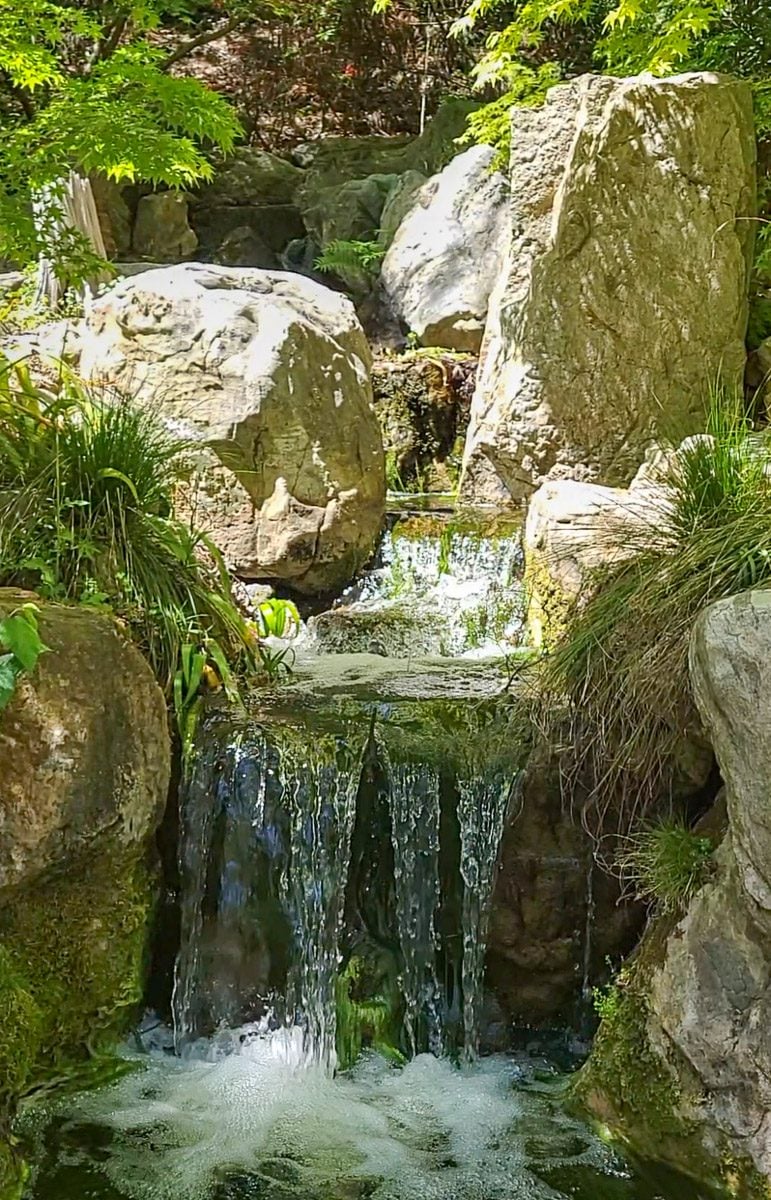
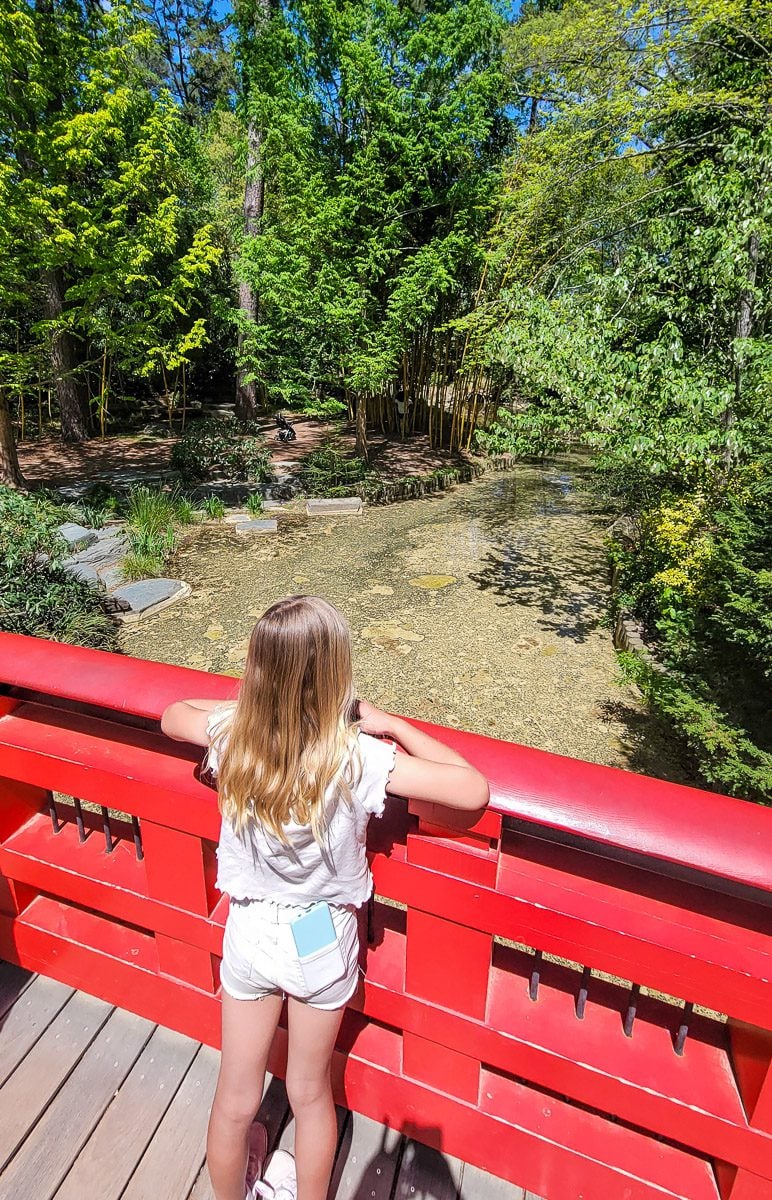
Dramatic Japanese Garden featuring a recirculating stream and waterfalls.
Garden Pond
Large pond offering opportunities to enjoy vibrant waterfowl and other pond life.
Pond-viewing Shelter
Small Japanese-style shelter tucked into a quiet streamside setting. This designated “Gardens for Peace” site symbolizes the power of peace in the garden to promote peace in the world.
Kathleen Smith Moss Garden
This unique shaded garden highlights mosses, lichens and liverworts.
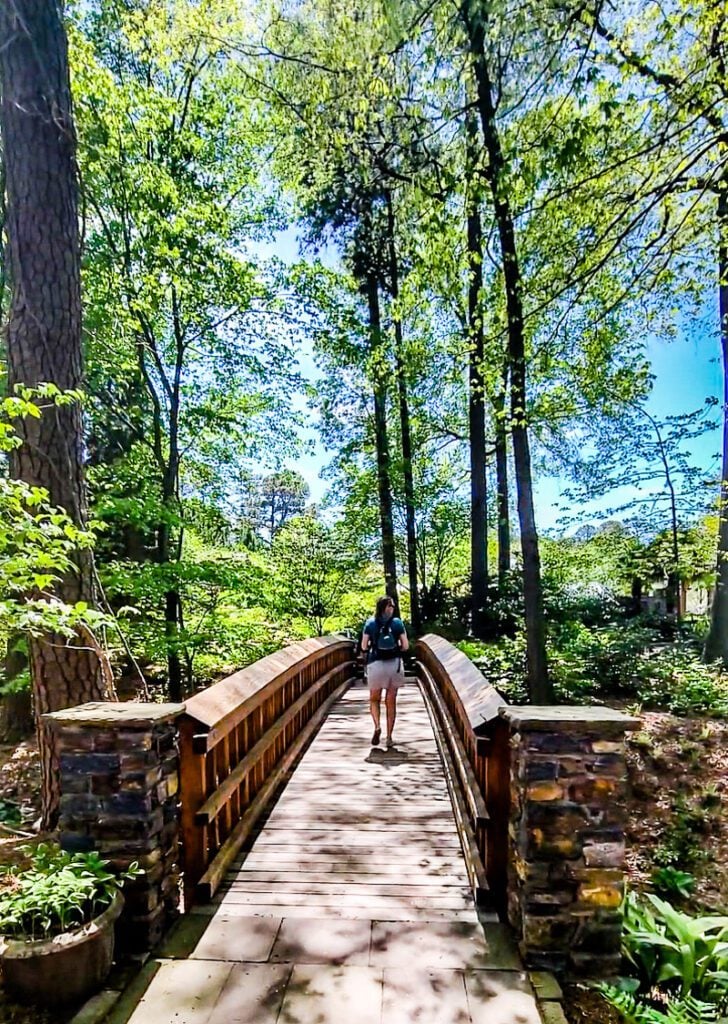
Meyer Bridge
A popular Japanese-style arched bridge surrounded by bamboo.
H.L. Blomquist Gardens of Native Plants
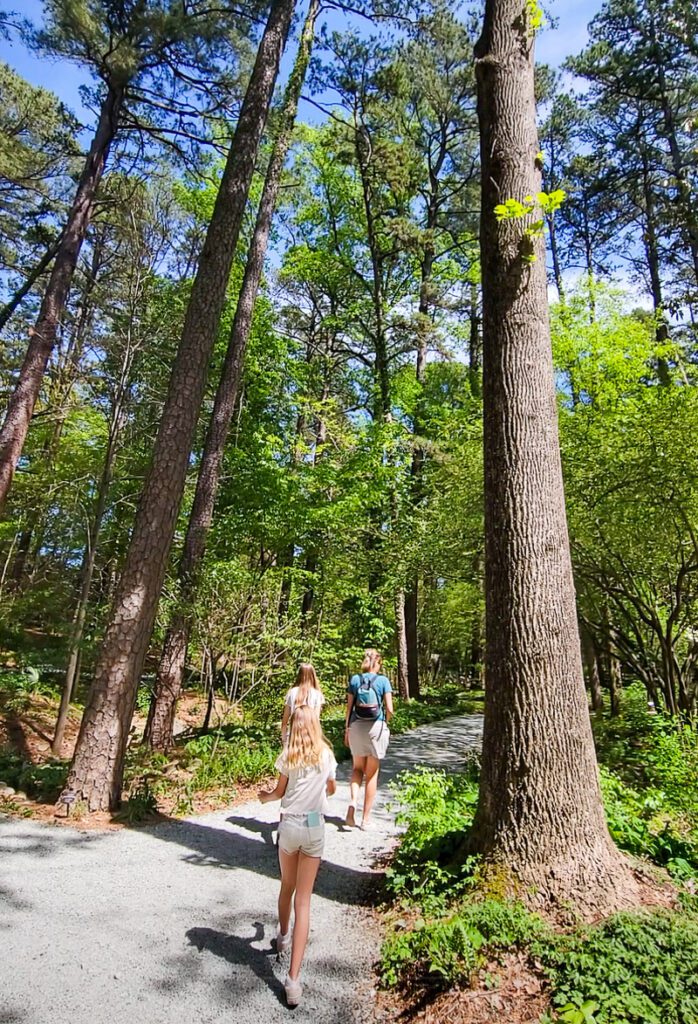
Rolling woodland terrain of 6.5-acres filled with more than 900 species and varieties of regional native plants. Dedicated in 1968, the garden honors Professor Hugo L. Blomquist, the first chair of Duke University’s Department of Botany and an authority on Southeastern flora. Highlights of the H.L. Blomquist Gardens of Native Plants include:
Steve Church Endangered Species Garden
Collection of rare and endangered plants from the southeastern United States. Explore this garden further with their interactive map.
Blomquist Wildlife Garden
Lush garden providing a home for not only plants but a diverse collection of Southeastern wildlife. Learn strategies for attracting and sustaining insects, birds and other creatures on your own property.
Carnivorous plant collection
Includes unique plant species native to North Carolina. Learn about how hungry plants have evolved to feed themselves.
Bird Viewing Shelter
Relax quietly here and see the host of bird species attracted to the nearby feeding station.
Doris Duke Center & Gardens
Behind the Doris Duke Center are several distinct gardens that adjoin the Angle Amphitheater, the setting for many performances, weddings and other special events. Highlights of the Doris Duke Center & Gardens include:
Page-Rollins White Garden
Inspired by the many white-flowered cottage gardens of England, highlighting the simplicity of white flowers and foliage, and the perfect setting for weddings, portraits, and nighttime events.
Virtue Peace Pond
Features an extensive collection of hardy and tropical water lilies, lotuses and marginal water plants. Plays host to butterflies, dragonflies and plants.
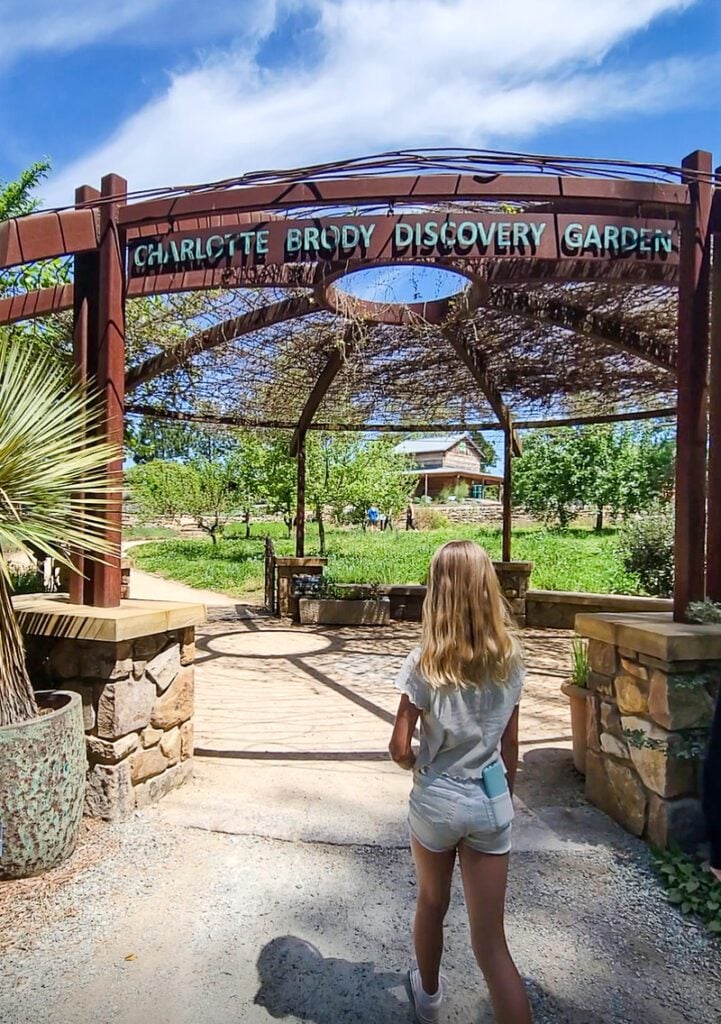
Charlotte Brody Discovery Garden
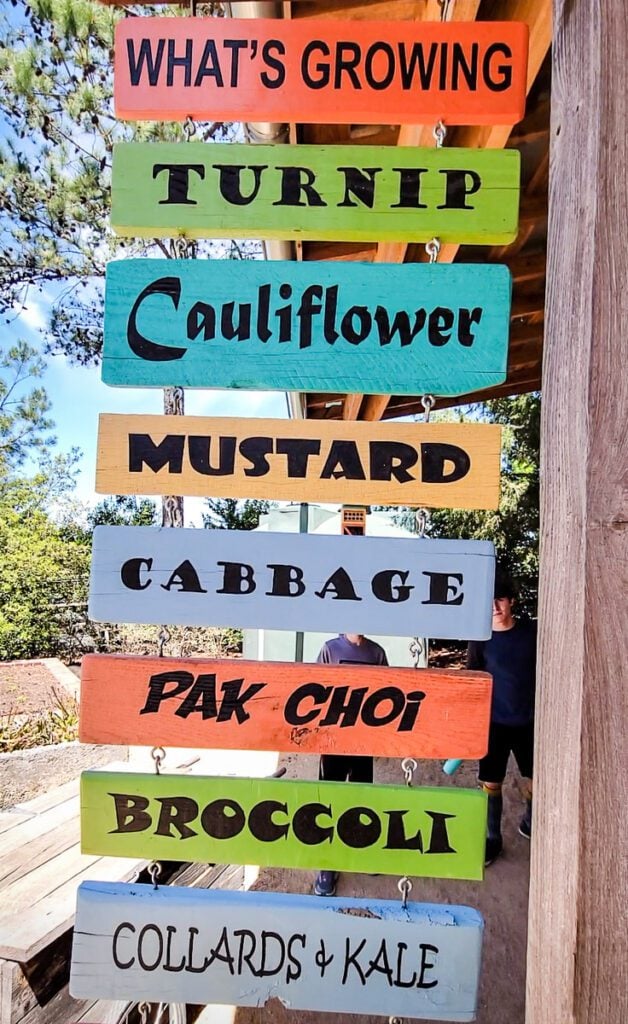
This organic, sustainable garden displays and teaches about plants that provide people, animals, birds and insects with food and shelter. Learn about organic vegetable and fruit gardening as well as water management.
Getting to Duke Gardens from Raleigh
Getting to Sarah P Duke Gardens from Raleigh, or from anywhere, is easy. Street address: 420 Anderson St., Durham, NC 27705.
From Raleigh:
Duke Campus buses (free), and GoDurham and GoTriangle buses all have stops at or near Duke Gardens entrances, and there are multiple walk-in entrances on Anderson Street.
Parking at Duke Gardens
Duke University Parking & Transportation charges $2 per hour for parking at Duke Gardens. Learn more about parking here. Duke University Parking & Transportation charges $2 per hour for parking at Duke Gardens from 8 a.m. to 7 p.m. all seven days a week. The pay-to-park lots routinely fill up by 10 a.m., especially on weekends.
To pay for parking, you can use the mobile phone app Pay By Phone and enter location 3109. You will have an option to print a receipt, but you do not need to place the receipt on your dashboard. Also, the machines will accept cash and credit cards, but they do not provide
The lot is a 5-minute walk from Duke Gardens’ main entrance. It will be open 8 am to 8 pm on Saturdays, Sundays & holidays.
Places to eat near Duke Gardens
You can pack a picnic and bring your own snacks and sandwiches, or you can choose one of the following nearby restaurants. A three-minute drive away is GRUB, or you can head into downtown Durham and consider:
- Tobacco Road Sports Cafe
- Pie Pushers
- Dashi for ramen
- Pizzeria Toro
- Bull City Burger & Brewery
- Beyu Caffe
- Bull McCabe’s Irish Pub
- Luna Rotisserie
- Guglhupf bakery cafe & biergarten
- Fullsteam Brewery
- Ice cream at The Parlour
- Coffee – nearby the gardens is great coffee at Cocoa Cinnamon
- There is also the Durham food hall.
Picnicing in Duke Gardens
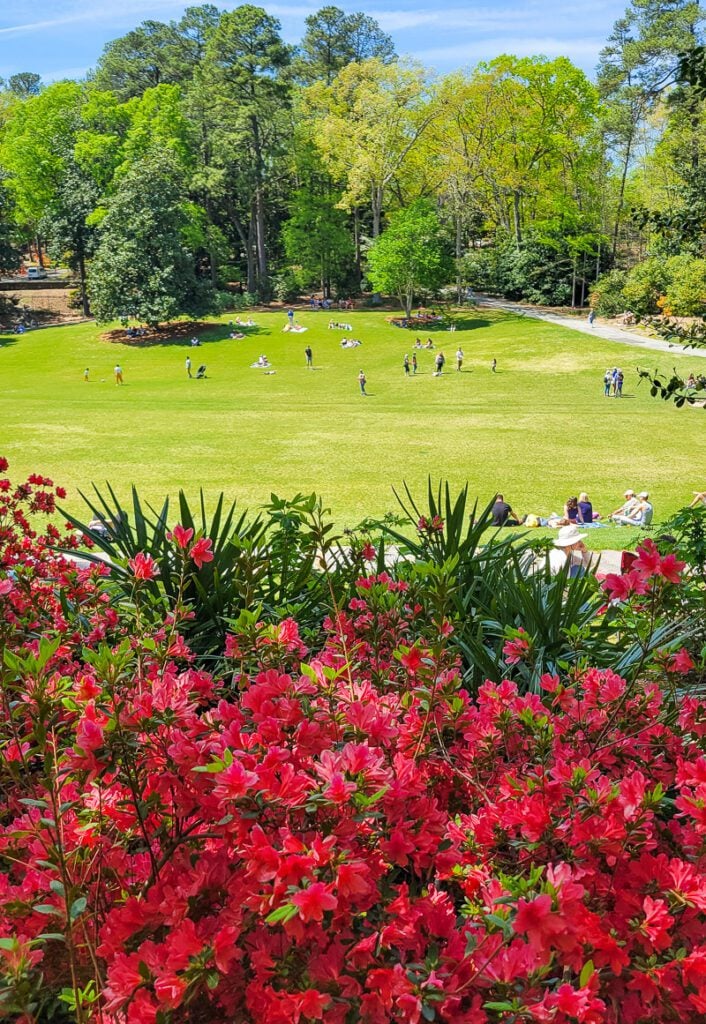
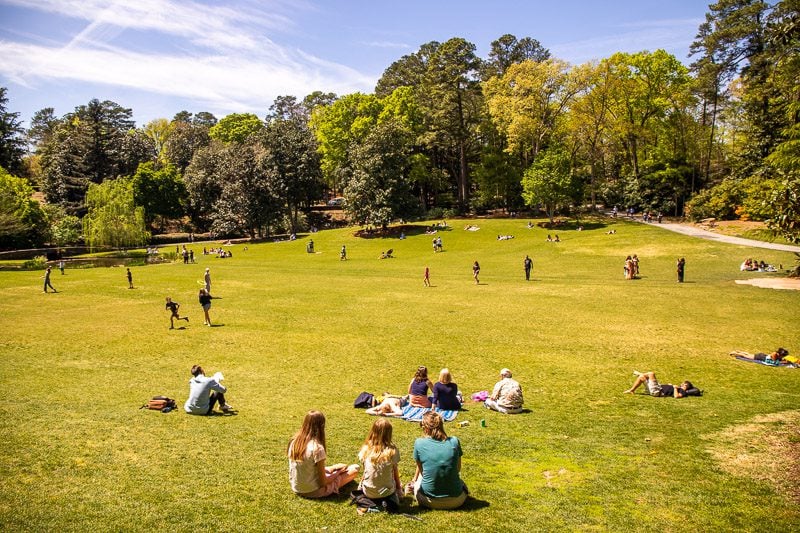
Yes. There are picnic areas around the Gardens, or use a blanket in the field areas, by the pond, and by the shop. There are also benches throughout the gardens that you may opt for. The South Lawn in the Historic Gardens is the best location to settle in for a picnic. Another beautiful and spacious gathering space is the Fisher Amphitheater, also in the Historic Gardens.
Groups of 15 or larger should register in advance to ensure that your visit doesn’t conflict with any Duke Gardens events or tours. Please be sure to place your trash in our garbage bins or take it with you. Note: they do not permit sports equipment such as balls, Frisbees, etc.
Watch Our Duke Gardens Video
Other things to do near Duke Gardens
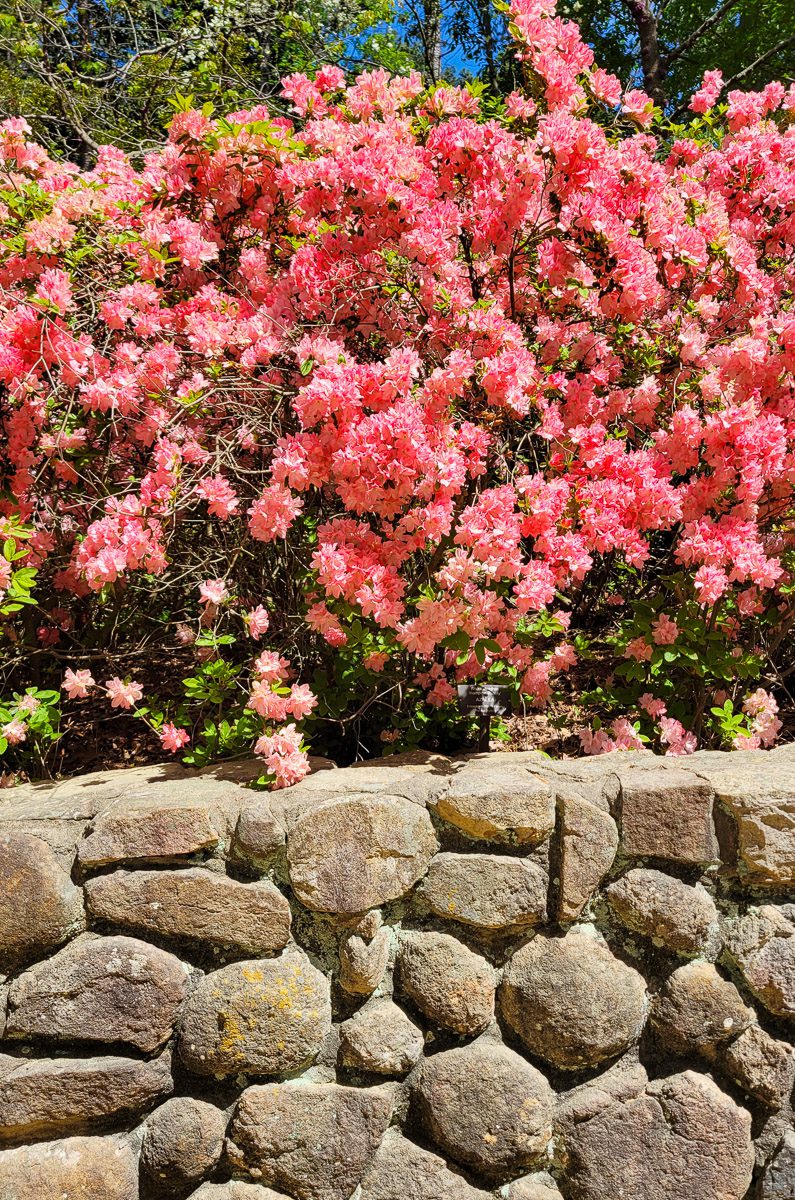
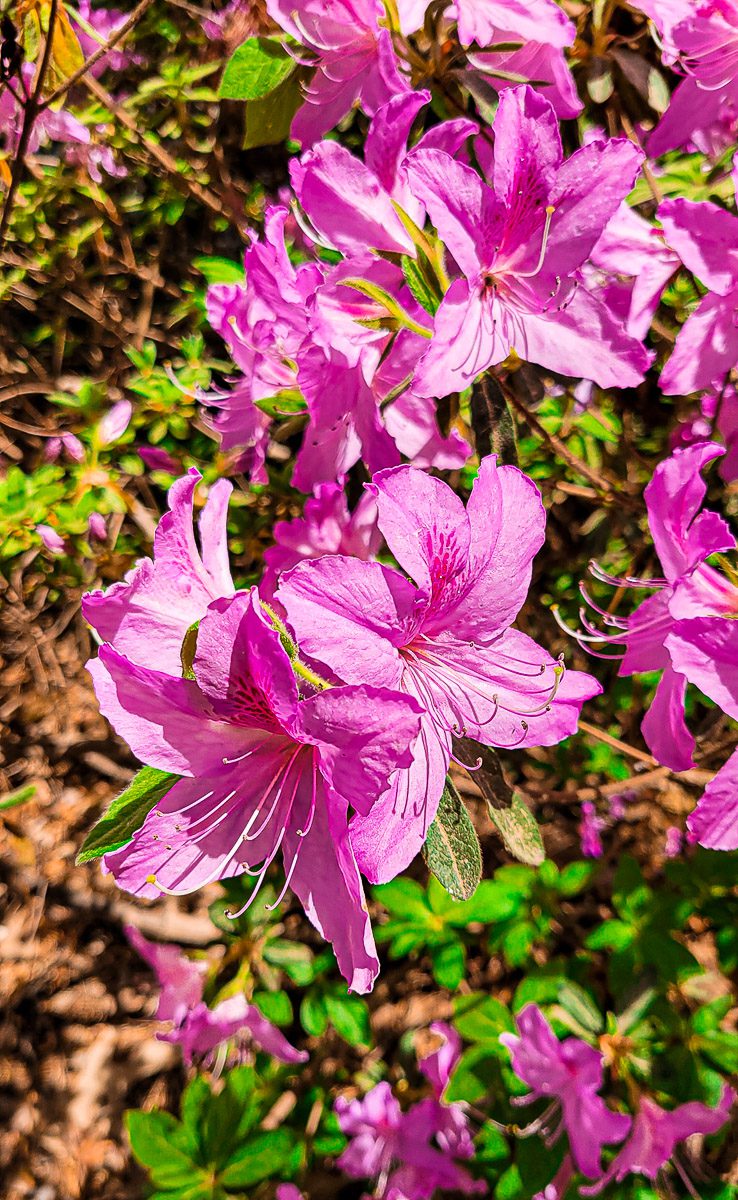
Why not combine a visit to the gardens with visiting the Duke University campus, which is one of the most beautiful college campuses in the country and a short five minute walk up a hill from the gardens leads to the main quad area, and Duke Chapel, which is stunning!
For the perfect day out in Durham, how about visiting Duke Gardens, grabbing lunch in Durham (see suggestions down below), wandering around Duke University or the American Tobacco District, then attending a Durham Bulls Baseball Game or taking the kids to the Museum of Life & Science or the Duke Lemur Center.
The heart of Durham is just a 7 minute drive from Duke botanical gardens. We enjoyed a delicious afternoon tea at the Washington Duke Inn an think it pairs perfectly with a day at the Duke Gardens.
Check out this list of things to do in Durham.
FAQs about visiting Duke Gardens
Are there bathrooms at Duke Gardens?
There are bathrooms in the Doris Duke Center open from 9 a.m.to 5 p.m. daily. There are also restrooms in the Terrace Gardens and the Asiatic Arboretum, which remain open later in the day.
What should I bring with me?
Consider bringing sunscreen, a hat and insect repellant. There is a drink vending machine outside the Doris Duke Center, and a water fountain with a bottle-filling faucet in the lobby.
If you bring food or drinks, please carry your trash out with you.
Is Duke Gardens stroller friendly?
I think a stroller would be fine in Duke Gardens for the most part as there are lots of descent pathways, but there are some steep slopes. I would pack the baby carrier if it was me.
Is Duke Gardens wheelchair friendly?
No, Duke Gardens is not wheelchair friendly. The gardens are set inside a former ravine and so there are many slopes and steps. Some slopes exceed 5%, which is more than the American Disability Act Standard. They also don’t offer wheelchair rentals.
Final thoughts
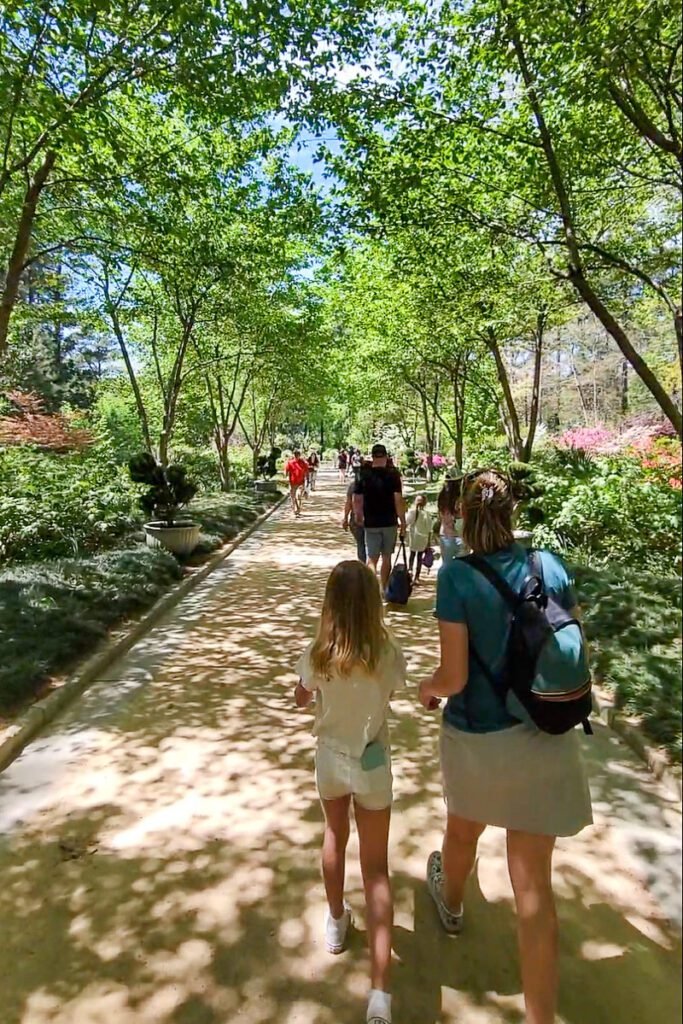
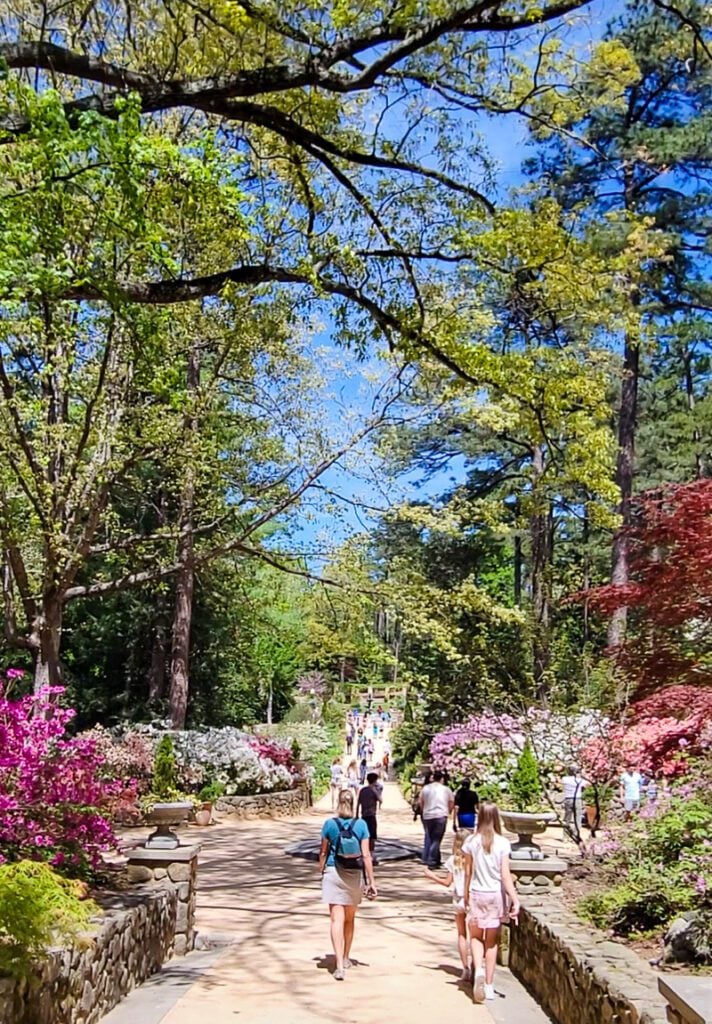
I hope this guide to Sarah P Duke Gardens helps you have a memorable visit to Durham. They are beautiful gardens that come alive in different ways in every season, and a lovely place to walk, escape, and unwind. There is ample space and places to sit and relax and take in the serenity, smells and sounds.
The gardens continue to undergo exciting changes, and you might not have time to explore in full on your first visit, but that’s ok as seasonal plantings and events will ensure each visit is a new experience. Check out their events calendar.
More Gardens To Love in Raleigh
- Don’t Miss JC Raulston Arboretum (5,000+ Plants)
- The Beautiful Raleigh Rose Garden (Free & Open 365 Days)
- Lovely Gardens In Raleigh (And One Amazing Garden Nearby!)
- The Juniper Level Botanic Gardens (with secret waterfall)
- The WRAL Azalea Gardens in downtown Raleigh (hidden gardens)
- Best places for prom, graduation and senior photos
Stay Connected to Raleigh
Join our free email community to receive free checklists, guides, insider tips, personal stories, fun finds, and the best events in Raleigh each week. We'll show you how to stay connected to Raleigh and love where you live! Join Below 👇
“Your weekly newsletter is a lifesaver for me. Yesterday we didn’t know what to do, I just check your list of events for the weekend, and we ended up in Cary at the Carolina Circus Festival. We had a great time so thanks a lot for all your good work 😊 we really appreciate you” Subscriber

Thank you! We’re so happy we could help you find ways to explore these beautiful gardens!