
If you’re planning on moving to North Carolina but are not sure which major city to call home, then you’re possibly comparing Raleigh and Asheville. These two cities have a lot of similarities; they both have a relaxed Southern vibe, year-round festivals, and a thriving food and arts scene. But they also have a lot of differences, which can make choosing one to call home a challenge.
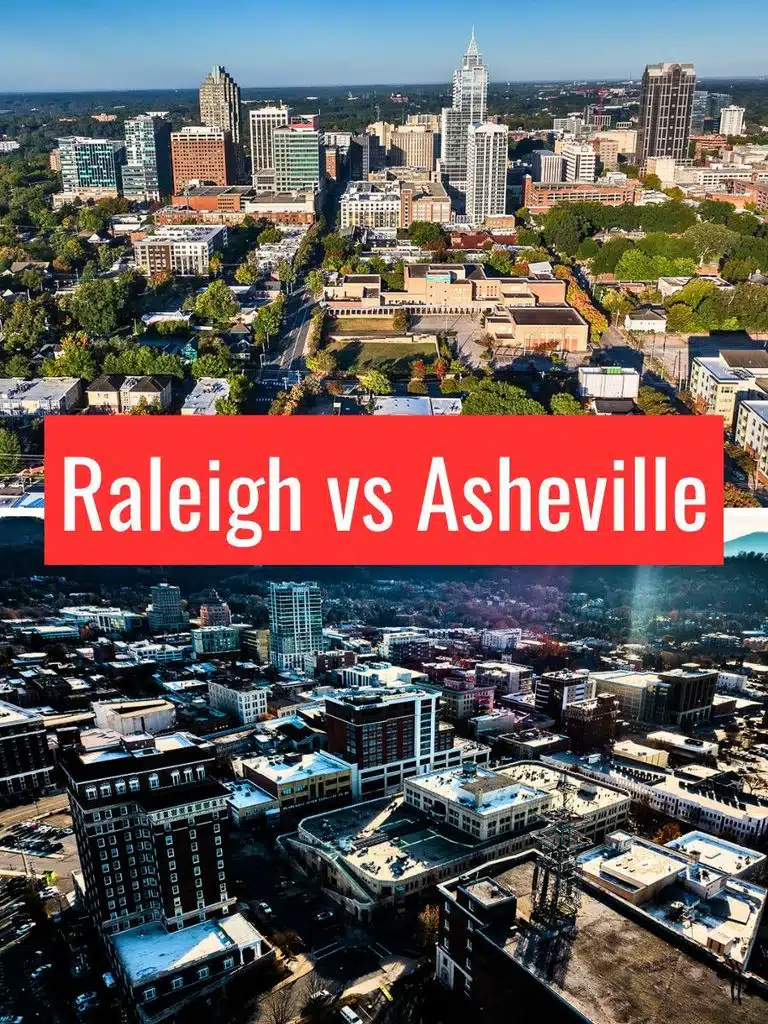
Raleigh is one of the fastest-growing capitals in the country and is fueled by innovation and expansion, whereas Asheville is more of a mountain haven where creativity, nature, and community fuel its soul.
Choosing between Raleigh and Asheville isn’t simply about deciding between city and mountains, though. It’s about job opportunities, safety, healthcare options, things you can do in your free time, what the weather is like, and much more. Since both cities consistently rank among North Carolina’s most desirable places to live, we thought it would be helpful to put together this comparison of Raleigh vs Asheville so you can have a more informed decision about where to live.
Raleigh vs Asheville: At a Glance
Job Market and Average Income
- Raleigh – One of the strongest job markets in the Southeast, driven by technology, biotech, healthcare, finance, education, and state government. Higher salaries, low unemployment rates, and annual employment grew by 2.3% in 2026.
- Asheville – A smaller economy centered on healthcare, tourism, hospitality, outdoor recreation, and the arts. Low unemployment rates, but lower salaries compared to Raleigh.
Housing Market
- Raleigh – A competitive housing market with lots of variety of homes. House prices are lower to buy and rent compared to Asheville, with more inventory of homes and less time on the market before going into pending.
- Asheville – Home prices are high compared to Raleigh, both renting and buying. There is less land to develop on, and so fewer homes on the market. Homes tend to stay on the market for longer than in Raleigh.
Cost of Living
- Raleigh – Removing housing costs, cost of living is lower than the national average. Slightly lower than Asheville overall, though higher in grocery costs.
- Asheville – Cost of living is slightly higher than Raleigh, though it has cheaper food and grocery costs.
Lifestyle and Entertainment
- Raleigh – A fast–paced vibe with a buzzing nightlife scene, professional sports teams to cheer on, craft breweries, festivals, a thriving dining scene, and live music and performance venues bringing in national and international touring artists. Lots of green space.
- Asheville – Famous for its creative community and independent spirit. One of the largest craft brewing cities in the U.S. Entertainment tends to be more local. The pace is slower and community-focused.
Crime and Safety
- Raleigh – Generally considered safe compared to the national average. Crime is concentrated in certain areas.
- Asheville – Overall crime is moderately higher than Raleigh, but again, it varies by neighborhood. Property crime tends to be more common than violent crime.
Education
- Raleigh – Excellent Wake County public schools, NC State University, and close proximity to Duke and UNC-Chapel Hill.
- Asheville – Asheville City Schools and Buncombe County schools are generally good. Higher education includes UNC Asheville and Asheville-Buncombe Technical Community College.
Airport and Travel
- Raleigh – Raleigh-Durham International Airport (RDU) offers numerous domestic flights and a growing number of direct international flights.
- Asheville – Asheville Regional Airport (AVL) is a regional airport and has nonstop flights to major cities in the U.S., but it doesn’t serve internationally.
Healthcare
- Raleigh – Excellent healthcare with nationally recognized systems including WakeMed, Duke Health, and UNC Health.
- Asheville – High-quality regional healthcare led by Mission Hospital and AdventHealth. Fewer hospitals mean higher waiting times, but care is considered good overall.
Weather and Climate
- Raleigh – Hot, humid summers, mild winters, and relatively little snowfall. High pollen count and risk of being hit by the back end of hurricanes and tropical storms from the Atlantic.
- Asheville – Cooler mountain climate with pleasant summers, colorful autumns, and occasional winter snow. Asheville is also vulnerable to hurricanes and storms.
Outdoor Recreation
- Raleigh – Access to 100 miles of greenways, lakes, state parks, and only a two-hour drive to beaches and mountains.
- Asheville – A paradise for outdoor enthusiasts with hiking, mountain biking, waterfalls, whitewater rafting, rock climbing, camping, and direct access to the Blue Ridge Mountains and Great Smoky Mountains.
Family Friendliness
- Raleigh – Excellent schools, family-oriented neighborhoods, lots of things to do, and family-focused events happening throughout the year.
- Asheville – A great choice for families who prioritize outdoor adventures. It also has excellent schools and family-focused events, but activities to do with kids are more centered around being outdoors.
Future Development and Growth
- Raleigh – One of America’s fastest-growing cities with a continued investment in housing, infrastructure, and innovation.
- Asheville – Growing steadily, but with more measured growth, with investment in tourism and developing infrastructure that keeps the mountain vibe. Its limited landmass means fewer opportunities for expansion.
Job Market

Before moving to any city, you want to make sure there’s plenty of work opportunities available. In that regard, the city of Raleigh has the upper edge over Asheville as it has one of the strongest job markets in the Southeast. Since the expansion of the Research Triangle Park, the city has attracted huge technology, biotech, healthcare, and finance corporations to move their HQs here, which in turn has strengthened the job market – in fact, annual employment grew by around 2.3% in 2026.
If you work in technology, the sciences, healthcare, finance, higher education, or the state government, then you’ll find plenty of work opportunities in Raleigh. Some of the major employers include IBM, Cisco, Lenovo, WakeMed Health & Hospitals, Duke Health, North Carolina State University, and the State of North Carolina. It also has one of the state’s lowest unemployment rates at approximately 3.0%, and offers some of the highest-paid jobs in the state, so when it comes to work, Raleigh has it down.

Asheville has a steady job market, but rather than being powered by major corporations, its job market centers around healthcare, tourism, hospitality, outdoor recreation, logging and construction, craft brewing, retail, and the arts. In Asheville, some of the biggest employers are Mission Health (HCA Healthcare), Buncombe County Schools, Buncombe County Government, the City of Asheville, UNC Asheville, Thermo Fisher Scientific, Eaton, and GE Aerospace. While Asheville is a smaller city than Raleigh, it’s natural that its economy is considerably smaller, and yes, salaries tend to be lower than those found in Raleigh. However, the unemployment rate as of July 2026 sits below the national average at 3.2%, which shows there is a stable job market.
Housing Market

Both Raleigh and Asheville are highly desirable places to live, but when it comes to buying a house, Raleigh has a broader mix of housing options available. Raleigh has everything from downtown apartments and townhomes to master-planned suburban communities, and there is a large inventory of homes on the market to buy. The median sale price is around $424,000, and typically, homes will stay on the market for around 34 days before going into pending, so if buying is on the horizon, be prepared to put offers in quickly. Although the buying market is competitive, renters have almost 2,000 properties on the market to choose from (as of July 2026). The average monthly rent in Raleigh sits at around $1,830 per month, though prices depend on neighborhood and number of bedrooms, etc.
Asheville, being in a desirable location nestled in the Blue Ridge Mountains, means there is limited land for new development, and there’s a consistently strong demand for woodland cabins and downtown condos. In Asheville, you’ll typically find a mix of charming Craftsman bungalows, mountain cabins, luxury homes with panoramic views, historic properties, and downtown condominiums up for sale. The demand has pushed home prices quite high, with the average median home sale as of July 2026 being approximately $507,000. Homes tend to stay on the market for 67 days, giving buyers more time to shop around.
In the rental market, the average asking rent in Asheville is approximately $1,900 per month, just above Raleigh, and there is much less on the market to choose from. As of July 2026, there were a little more than 500 rentals on the market.
NOTE: If you need help finding a local realtor here in the Raleigh area, we can connect you with our trusted realtor partner we have personally vetted and will take great care of you. Click to learn more.
Cost of Living

Consider a family of four (excluding housing costs), and you’ll find both Raleigh and Asheville have low cost of living compared to the national average. The average monthly expenses – groceries and food, healthcare, childcare, transport, taxes, and other necessities – are approximately $4,163 in Raleigh and $4,466 in Asheville.
Daily expenses such as groceries can be slightly lower in Asheville, but because of higher home costs and lower salaries, the overall cost of living is better in Raleigh. Taxes are identical because both cities are in North Carolina and pay the same state tax, and the local county taxes for both cities are the same at 7.25%.
Lifestyle and Entertainment
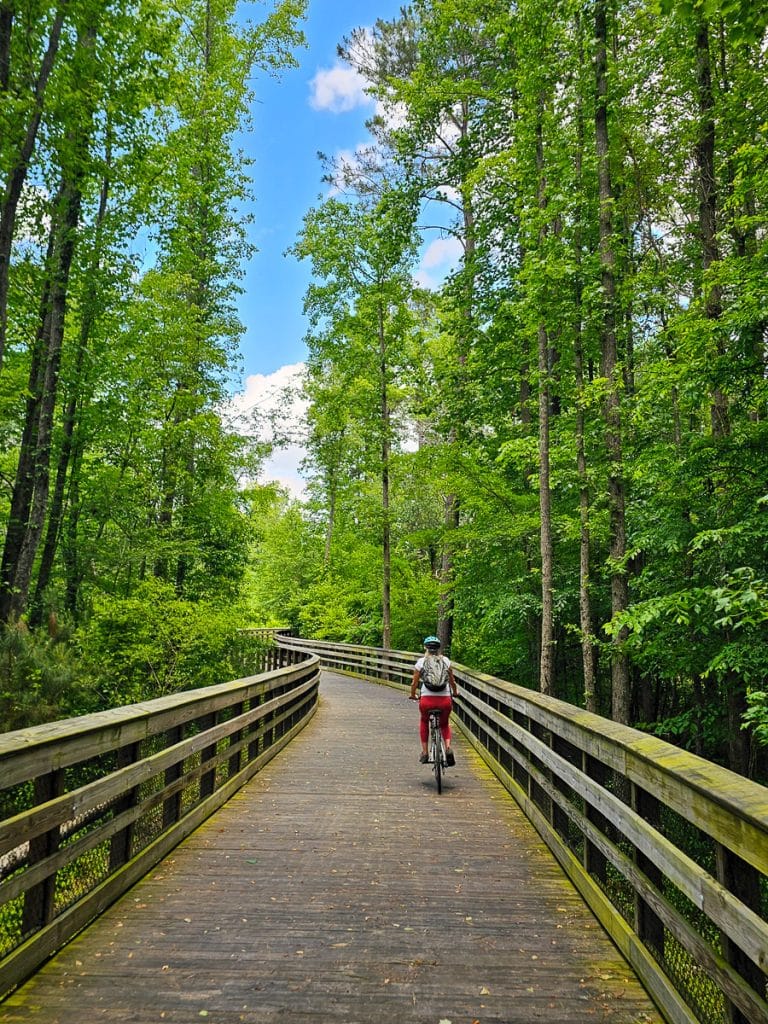
Both cities are very green and embrace the outdoors, so if you’re a nature lover, both cities should be on your radar. Raleigh has a unique vibe; it feels youthful, futuristic, and yet quaint and community-focused, like a small town despite being a big city. The abundance of lakes, parks, forests, and greenway trails means you can easily leave the hustle and bustle behind, but if you want to feel the pulse, it has an energetic downtown with a lively nightlife scene.
Raleigh has a solid craft beer scene (not as big as Asheville) and tons of excellent restaurant options for foodies. It also has bigger live music and performance venues, so it often welcomes national and international touring artists. Sports are also big in Raleigh; they love college football, ice hockey, soccer, and golf. Not to mention the year-round calendar of festivals. Hopscotch Music Festival, the North Carolina State Fair, Artsplosure, and so much more keep the city feeling alive.

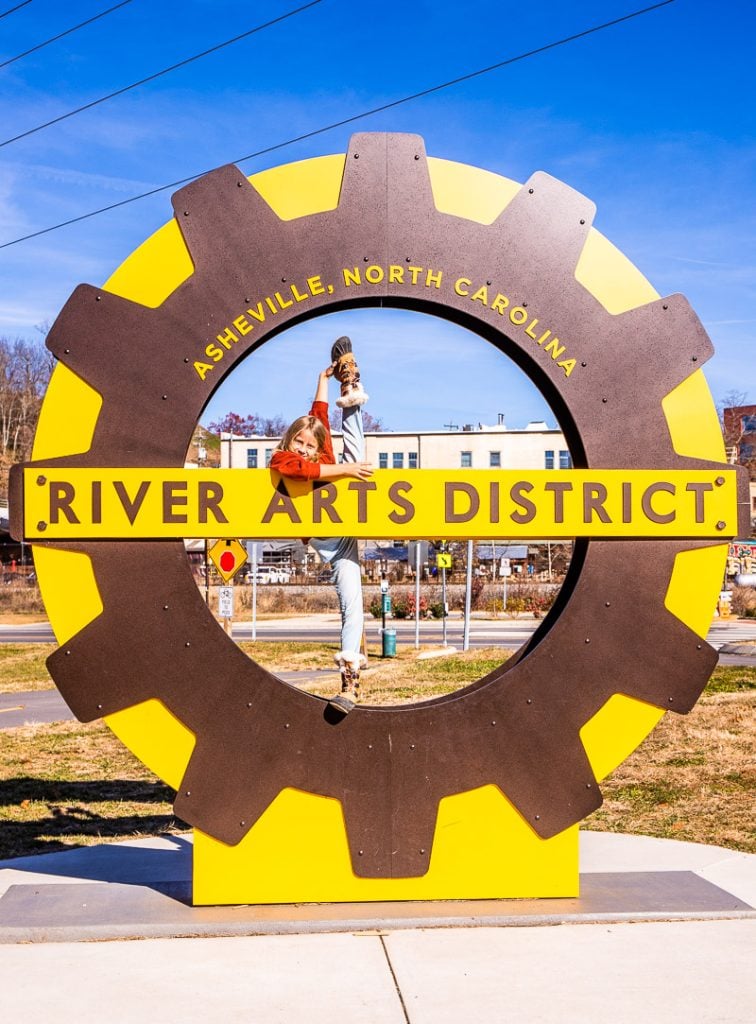
Asheville’s vibe leans towards its creative community and the great outdoors. The River Arts District is one of North Carolina’s biggest creative hubs, where artists and makers welcome people into their studios and galleries, and you’ll also find the highest concentration of craft breweries per capita in Asheville, the highest number of any U.S. city. When it comes to live music, it’s these breweries that double up as venues, and you’ll find there’s always a Bluesgrass band playing somewhere in the city. The breweries also have a more relaxed vibe, so nightlife is more chilled than Raleigh’s, but that’s part of its charm. Asheville is very community-driven, so you’ll find farm-to-table restaurants, independent shops, and intimate bars over chain brands.
Like Raleigh, Asheville has a year-round calendar of events that keeps this small mountain city bursting with energy. Some of the most popular festivals are the LEAF Global Arts Festival, Asheville Art in the Park, Brewgrass Festival, Downtown After 5, and the National Gingerbread House Competition at The Omni Grove Park Inn. Of course, Asheville’s biggest draw is its location. You have the Blue Ridge Mountains on your doorstep, as well as the Blue Ridge Parkway, and you could be in the Great Smoky Mountains in less than 2 hours.
Crime and Safety
Raleigh has a generally low crime rate, with overall public safety deemed better than the national average. According to the Raleigh Police Department, violent crime decreased by 1% in 2025, and property crime fell by 17%. However, independent crime data has recorded violent crime in Raleigh at approximately 489 incidents per 100,000 residents. However, this tends to be localized to particular neighborhoods in downtown, and newer suburban developments are considered very safe.
Asheville, despite its welcoming mountain-town atmosphere, experiences higher rates of both violent and property crime than Raleigh. As of July 2026, Asheville’s violent crime rate sits at approximately 796 incidents per 100,000 residents and its property crime rate at roughly 3,895 incidents per 100,000 residents, putting it higher than the national average. Like Raleigh, crime is generally concentrated in specific areas. We’ve visited Asheville many times and never felt unsafe, but we tended to stick to touristy areas.
Education

Raleigh is a larger city, and so it has more options when it comes to schools. Its public school system has a national reputation for being exceptional, with the Wake County Public School System (WCPSS), the largest school district in North Carolina and one of the largest in the United States, being especially recognized for its strong academic performance, high graduation rates, extensive Advanced Placement offerings, magnet schools, and career and technical education programs. For higher education, Raleigh is home to North Carolina State University and is also well placed to serve Duke University in Durham and the University of North Carolina at Chapel Hill.
Asheville is primarily served by Asheville City Schools and Buncombe County Schools, both of which enjoy solid reputations for academic achievement and are rated above average in terms of performance. Being a smaller city, Asheville students benefit from smaller class sizes and strong community involvement. For college students, the University of North Carolina Asheville is a nationally recognized public liberal arts university, and there’s also Asheville-Buncombe Technical Community College, a highly regarded community college. Ultimately, both cities provide quality public education.
Airport and Travel

We’re global travelers, and so for us, having access to an airport that can jet us away on vacation to a plethora of places is high on our list when we’re choosing somewhere to live. If you’re also a frequent flyer, then Raleigh might be a better option for you. It’s served by Raleigh-Durham International Airport (RDU), which is one of the Southeast’s largest and fastest-growing airports. It currently has an extensive network of domestic and international flights, serving more than 19 airlines and connecting most major cities in the U.S. and international locations such as London, Paris, Dublin and Frankfurt. It is expanding its international offering year on year and now serves flights to Central America and the Caribbean.
Asheville Regional Airport (AVL) is a smaller regional airport and only has domestic service. It’s served by eight airlines and connects to around 30 nonstop domestic destinations, including Atlanta, Chicago, Dallas-Fort Worth, Denver, New York, Washington, D.C., Boston, Orlando, Fort Lauderdale, Tampa, and Minneapolis. If you are looking to fly internationally, you would need to fly from Asheville to international hubs such as Atlanta, Charlotte, Dallas-Fort Worth, or even Raleigh, before flying overseas.
Healthcare
Raleigh has an excellent healthcare system, with a greater choice of hospitals and medical centers to choose from. It typically boasts shorter wait times for specialty care compared to the national average. Raleigh is served by three major health systems: Duke Health, UNC Health (including UNC Rex Hospital), and WakeMed Health & Hospitals; all of which have excellent reputations.
Asheville’s healthcare system is anchored by Mission Hospital, part of HCA Healthcare, which serves as the primary tertiary referral center for western North Carolina. Mission Hospital is home to the region’s only Level II Trauma Center, comprehensive stroke center, and children’s hospital. Because Mission serves such a large geographic area with fewer competing hospital systems, it experiences longer waits for certain specialists than those living in Raleigh. Although healthcare options are more limited compared to Raleigh, it’s well-regarded and accepts most major private insurance plans.
Weather and Climate

Raleigh and Asheville do have considerably different weather patterns, largely due to elevation. Raleigh has a classic subtropical climate with hot, humid summers and relatively mild winters without much snowfall, while Asheville’s location in the Blue Ridge Mountains means it has cooler temperatures year-round and opportunities for snow in the winter. Raleigh can get hot in the summer, so we often make trips to Asheville as a cool destination to visit to escape the heat. Asheville is also stunning in the Autumn, with its forested location making it colorful with the changing of the leaves.
Spring brings very high pollen levels to both cities, but Raleigh consistently ranks among the worst U.S. cities for seasonal pollen. If you suffer from allergies, this is something to seriously consider. In the summer, Raleigh can also experience severe thunderstorms and impacts from weakening tropical hurricanes from the Atlantic.
Asheville also receives a high pollen count, but the mountain breeze tends to blow it away before it gets too intense. Asheville is also vulnerable to direct hurricane strikes and remnants of tropical storms, and in recent years, has been hit by flash flooding, landslides, and severe storm damage. The city is still recovering from Hurricane Helene in September 2024, which caused widespread devastation. The resilience and strength of the Asheville community in their efforts to rebuild is inspiring.
Outdoor Recreation

Hikers, fishing enthusiasts, cyclists, and twitchers will love living in both Raleigh and Asheville. Raleigh is nicknamed the City of Oaks for a reason; its abundance of oak trees makes it one of the greenest cities in the Southeast. It also has close access to lakes, greenway trails, and state parks within minutes of downtown. It’s also only a two-hour drive to the nearest beach, so if you enjoy being by the coast, Raleigh’s location is better.

Asheville is nestled in the Blue Ridge Mountains, so of course it’s one of the top destinations in the eastern United States for outdoor recreation. It has excellent hiking and mountain biking trails, as well as whitewater rafting routes and fly-fishing spots. Asheville is surrounded by some of the most spectacular natural landscapes in the Southeast, including Pisgah National Forest, DuPont State Recreational Forest, and the Great Smoky Mountains National Park. Although we love Raleigh’s landscape, there can be no parallel to what Asheville offers.
Family Friendliness

Whether you’re looking to start a family or you have children already, both Raleigh and Asheville are excellent places to raise a family. Raleigh has highly rated schools, over 200 parks and playgrounds, extensive childcare options, and a wide range of family attractions such as the North Carolina Museum of Natural Sciences, Marbles Kids Museum, and Pullen Park.
Asheville provides a smaller, community-oriented environment and is ideal for families looking for a slower pace of life to raise their kids. The city has around 65 parks and playgrounds, access to greenways and nearby national forests where children can play and learn in the natural world. Asheville’s family-friendly attractions tend to be outdoor-focused, such as the WNC Nature Center and Blue Ridge Parkway. Overall, both cities are highly family-friendly, but in different ways.
Future Development and Growth
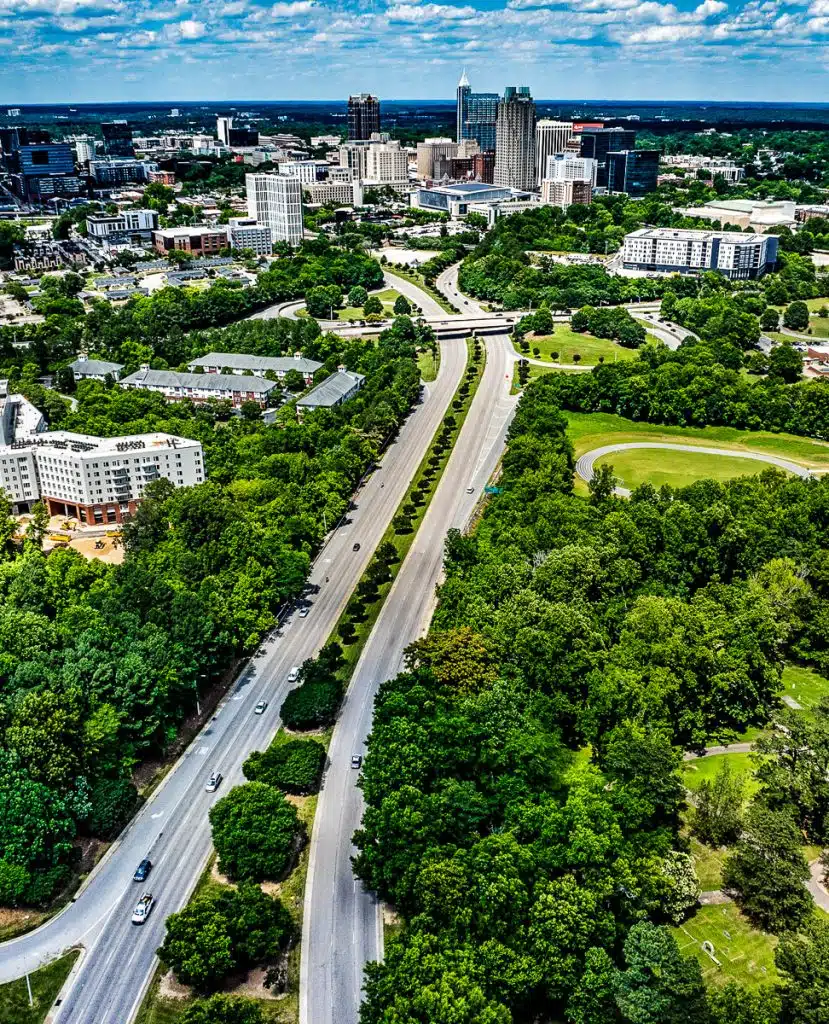
Raleigh is one of the fastest-growing cities in the Southeast, and so future development is a major part of the City of Raleigh’s plan. It’s consistently investing in new infrastructure and planned developments to accommodate growth, and the job market and housing market grow in accordance with this. Asheville is growing, but much more slowly. It has steady growth fueled by tourism, mostly, but its future is looking towards more sustainable development and building more resilient infrastructure, whilst also trying to preserve its quiet mountain character.
Raleigh has a long-term outlook on growth, whereas Asheville is more measured and is centered on quality of life rather than expansion. Neither is right or wrong, just different; it depends on what speaks to you. We hope this guide helped you understand a little bit more about what it’s like to live in Raleigh or Asheville, and gave you some food for thought when choosing which is the city you’d like to live in. If you need more advice about real estate options, feel free to reach out to us; we’re here to help.
NOTE: If you need help finding a local realtor here in the Raleigh area, we can connect you with our trusted realtor partner we have personally vetted and will take great care of you. Click to learn more.
More city comparisons:
Stay Connected to Raleigh
Join our free email community to receive free checklists, guides, insider tips, personal stories, fun finds, and the best events in Raleigh each week. We'll show you how to stay connected to Raleigh and love where you live! Join Below 👇
“Your weekly newsletter is a lifesaver for me. Yesterday we didn’t know what to do, I just check your list of events for the weekend, and we ended up in Cary at the Carolina Circus Festival. We had a great time so thanks a lot for all your good work 😊 we really appreciate you” Subscriber
