

If you’re looking to trade high-rise views for mountain peaks, then a weekend getaway to the Great Smoky Mountains from Raleigh should be on the cards!
The Smokies are a peak destination to visit in North Carolina and Tennessee and are packed full of adventure, history, and unspoiled nature.

Getting to the Great Smoky Mountains does require some effort, but it’s worth it for the incredible vistas, serene hiking trails, and close-up wildlife viewing opportunities.
No need for a compass, just follow this guide on how to spend a weekend in the Great Smoky Mountains National Park from Raleigh – it’s the ideal getaway for anyone looking to escape the office and embrace the wild beauty of one of the most visited national parks in the country.
How to get to the Great Smoky Mountains National Park
There are two ways you can get there – you either drive or you catch a plane. As we discuss below, driving is the best and most practical option!
Driving from Raleigh to The Great Smoky Mountains

The drive will take you roughly 4.5 – 5.5 hours, depending on traffic, what time of day you depart, and which part of the Smokies you base yourself in. On the North Carolina side, I recommend you stay in either Cherokee, Bryson City or Asheville.
Asheville is the closest gateway from Raleigh, and is only an hour’s drive from the Smokies, so you can easily drive in and out each day.
The drive from Raleigh to Asheville takes approximately 3 hours and 40 minutes following the I-40 W the whole way. Drive times from Raleigh to the Great Smoky Mountains National Park:
- Raleigh to Asheville – 3 hours 40 minutes
- Raleigh to Cherokee – 4 hours 40 minutes
- Raleigh to Bryson City – 4 hours 40 minutes
- Raleigh to Pigeon Forge, TN – 5 hours 40 minutes
- Raleigh to Gatlinburg, TN – 5 hours and 45 minutes
If you want to make the road trip to the Smokies more exciting, here is a 7-day road trip itinerary between Raleigh and Cherokee in the Great Smoky Mountains.
Flights from Raleigh to The Great Smoky Mountains

Alternatively, you can fly from Raleigh-Durham International Airport to Knoxville in Tennessee, which is the closest Airport to Gatlinburg and Pigeon Forge (1-hour drive).
The benefit of staying in Gatlinburg or Pigeon Forge is they are the most iconic places to access the Smokies from, and put you closer to the attractions. And it’s totally opinion based, but we don’t really like Gatlinburg or Pigeon Forge, but sometimes location trumps.
However, the flight will take around 3 hours, with a changeover in Charlotte, and you will need to pick up a hire car and drive an additional hour.
With getting to the airport, getting through security, picking up a rental car, and driving to Gatlinburg or Pigeon Forge, you won’t save any time flying and you won’t save any money, either. So weigh up the pros and cons of staying on the Tennessee side and see if this is something you’re willing to pay in time and money for.
Western North Carolina Travel Updateas (Post Hurricane Helene)
Western North Carolina obviously got hit hard by Hurricane Helene, but that does not mean they are closed to tourists – they are more than welcoming and are quickly rebuilding and reopening. As it’s a large area, be sure to check the destinations you are headed to in case of closures. You can find updated travel information here.
Suggested 2 Day Itinerary for the Great Smoky Mountains

Asheville is the closest gateway to the Smokies from Raleigh, so we will begin our itinerary from there. You will want to set off mid-afternoon on a Friday in order to reach Asheville by the evening, giving you two full days to road trip the Smokies. I recommend driving back on Monday – if you can.
You will need a car for the following itinerary, whether you hire one or you drive all the way from Raleigh is up to you.
Before setting off, you will also want to pack picnic food and snacks for the drive, and pack plenty of water too, as you’re going to do some hiking! Here is how we would spend our weekend in the Great Smoky Mountains when visiting from Raleigh.
Day 1 (Friday): Raleigh to Asheville

Set off mid-afternoon on Friday from downtown Raleigh and follow the I-40 W to Asheville. It’s not the most scenic drive, but it’s quick and you should reach Asheville in 3 hours and 40 minutes depending on traffic.
Assuming you set off at 2 pm, you will arrive in Asheville ready for dinner. Check into your hotel and then wander around the Asheville River Arts District, our favorite part of downtown Asheville.
NOTE: the River Arts District was one of the areas most impacted by Hurricane Helene, but a hope-filled and robust collection of art studios, galleries, cafes, shops and businesses in North RAD have reopened and are welcoming visitors.
Unfortunately, we won’t be spending much time in Asheville itself on this trip, but if you have longer at your disposal, here’s how to spend 48 hours in downtown Asheville (we visited pre-Hurricane Helene).
Day 2 (Saturday): Asheville to Gatlinburg
Stop 1: Visit the Oconaluftee Visitor Center
- Distance from Asheville: 55 miles
- Drive time: 1 hour 10 minutes
- How long to spend there: 1 hour
We always begin our trips with a visit to the Visitor’s Center, as it’s the best way to get familiar with the region, learn about its history, and pick up information.
Oconaluftee Visitor Center has a small museum with cultural history exhibits, and if you’re visiting in the summer, you can learn about ranger-led programs.
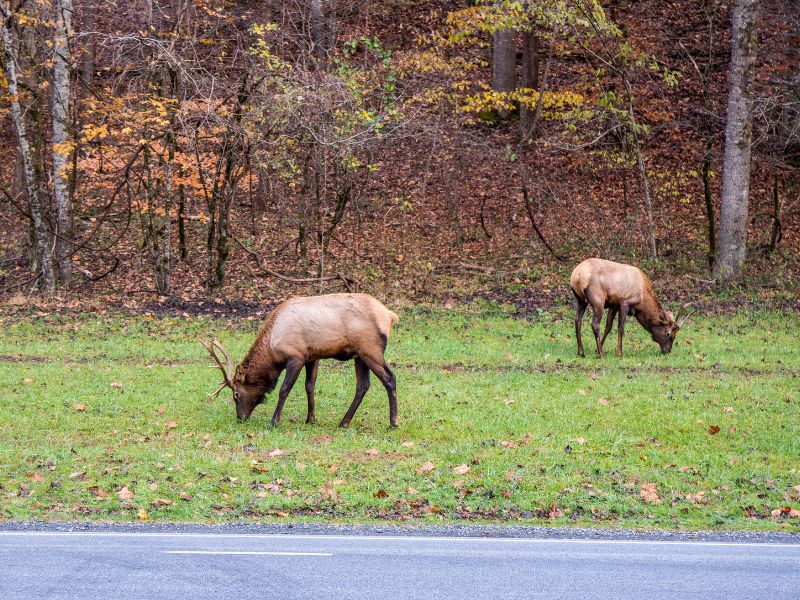
Oconaluftee is a popular place to see elk, especially during the rut season in the Fall (dawn is the best time to see them)

You will also find the Mountain Farm Museum across the road from the Visitor’s Center which is worth visiting to see how log structures were made in the Smokies. You can see a collection of farmhouses, barns, and more.
There’s also a pretty 1.5-mile riverside trail which follows the Oconaluftee River from the visitor center’s Mountain Farm Museum to the border of the National Park with Cherokee. Grab some snacks from the vending machines, use the public restrooms if you need to, and start walking up the road to…
Stop 2: Step back in time at Mingus Mill

- Distance from previous stop: 0.5 miles
- Drive time: 10-minute walk
- How long to spend there: 1 hour
Just a short walk up from the Visitor’s Center over the bridge is Mingus Mill, a historic gristmill built in 1886. This was a working mill used to create flour and is unique in that it used a water-powered turbine to power the machinery.
If you’re visiting in the Summer or early Fall, there are a variety of programs on offer here including history talks and demonstrations. Note: the mill is currently closed for rehabilitation work, but you can check the website for details of its reopening.
Stop 3: Drive the Newfound Gap Scenic Drive

From the visitor’s center, you can drive straight onto the Newfound Gap, also known as US 441, a scenic drive that extends from Cherokee all the way up to Gatlinburg.
The 33-mile road winds through the craggy mountains, with several viewpoints and small hikes you can do along the way.
It showcases the best of the Smoky Mountain range, giving you access to the dense forests packed with spruce fir, pine, and cove hardwood trees, as well as viewpoints of the rocky outcrops of the mountains.
It has an elevation of 5,056 feet, which is one of the lowest roads in the Smokies, so you don’t need to worry too much about altitude sickness on this drive.
Along the way, stop at the Newfound Gap Overlook and Andrews Bald for scenic views of the mountain range. These would make the perfect picnic stop for lunch.

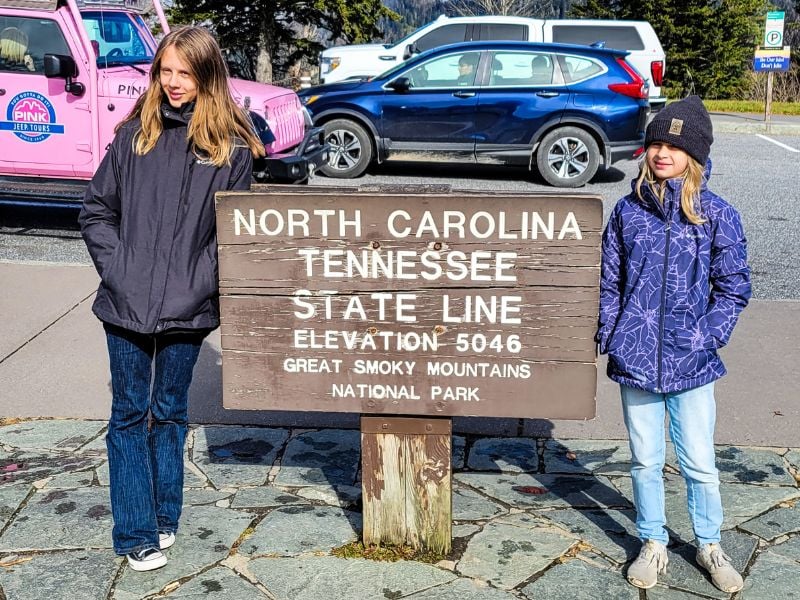
Be sure to stop by the Newfound Gap & Rockefeller Memorial, the place where President Franklin D. Roosevelt dedicated the Great Smoky Mountains as a National Park. Don’t miss the obligatory photo straddling the North Carolina and Tennessee state line! The Applachian trail also runs through here, so you can take a picture on it and pretend you hiked it! A few steps counts right?
Don’t worry if you miss any stops on the Newfound Gap, as we will drive back this way the next day.
Stop 4: Hike to Kuwohi (Clingmans Dome)

- Distance from previous stop: 7 miles
- Drive time: 10 minutes
- How long to spend there: 1 hour
Take a short detour off the Newfound Gap onto Kuwohi Road, formerly known as Clingmans Dome Road. At the end of the road, there is a parking area and a trailhead, leading you to a small hiking trail up to the summit of Kuwohi – the highest mountain in the Smokies.
Don’t let that accolade intimidate you though, the trail is only 1 mile (1.6 km) and takes about 30-45 minutes to hike. It’s short and steep but well-maintained, and families with kids can do it.


Observation tower
At the end of the trail, there is an observation tower where you can admire the panoramic views of Sugarland Mountain and the Elkmont area. See the trail map here.
Stop 5: Hike to Grotto Falls via Trillium Gap Trail

- Distance from previous stop: 27.5 miles
- Drive time: 1 hour
- How long to spend there: 1 hour 30 minutes
Once you get off the Newfound Gap, you’re in Gatlinburg. Instead of driving into the town, turn right, and drive along Cherokee Orchard Road and Roaring Fork Road to the trailhead for the Trillium Gap trail, which will lead you to Grotto Falls.
From the trailhead, it’s a 2.6 mile (4.2 km) out-and-back hike to the falls, which takes about 1 hour and 20 minutes to hike, but you may want to slow down the pace as the trail is beautiful, with lots of streams and wildflowers to see.

Grotto Falls is the reason to hike this trail. It’s a 25-foot waterfall surrounded by misty and mossy old forest and is the only waterfall in the Smoky Mountains to have a trail that passes behind it.
You can continue on the trail to reach Mount LeConte, which is another 10 miles away. If you have time and missed some of the attractions before, you might want to consider this, but on this itinerary, there won’t be time to go further.
Turn back at the falls and head back the same way you came. See the trail map here.
Stop 6: Gatlinburg

- Distance from previous stop: 5 miles
- Drive time: 30 minutes
- How long to spend there: 1 night
Gatlinburg is the most famous gateway to the national park. It has three entrances to the Smokies and receives 14 million visitors a year – so book your accommodation early!
Honestly, Gatlinburg feels a bit like Disneyland in the mountains, with tons of gift shops and souvenir stores, overpriced restaurants, arcades, and mountain-inspired attractions. The nearby strip in Pigeon Forge has a similar vibe, maybe worse!
Most people go to Gatlinburg expecting a quiet, mountainside resort with incredible views. While you do get incredible views, and the resorts are usually very high quality, the town itself can feel overly touristy and very crowded.
Some people like this, but it’s not our vibe. We’re just keeping it real for you. We’re just going to stay one night and then bust out of here the next day!
Day 3 (Sunday): Gatlinburg to Asheville/Raleigh
Stop 1: Elkmont Historic District

- Distance from previous stop: 10 miles
- Drive time: 22 minutes
- How long to spend there: 1-2 hours
Get up early and get to Elkmont at around 8:00 am, as you’re going to be busy today and need as much time on your side as possible.
Elkmont Campground is the largest campground in Great Smoky Mountains National Park, but it’s not just any old campsite. This was the second largest town in Sevier County and used to be an old logging town.
However, in 1925, the lumber company closed up, and the town was abandoned. Today, you can walk around where the town once stood and see some old, rusty cabins reclaimed by the woodland.
Some of the cabins have been restored, some have been left alone. Some you can enter and some you cannot. Look for signs telling you which you can go in.
Stop 2: Cades Cove Bike Loop
- Distance from previous stop: 26.6 miles
- Drive time: 1 hour
- How long to spend there: 2 hours
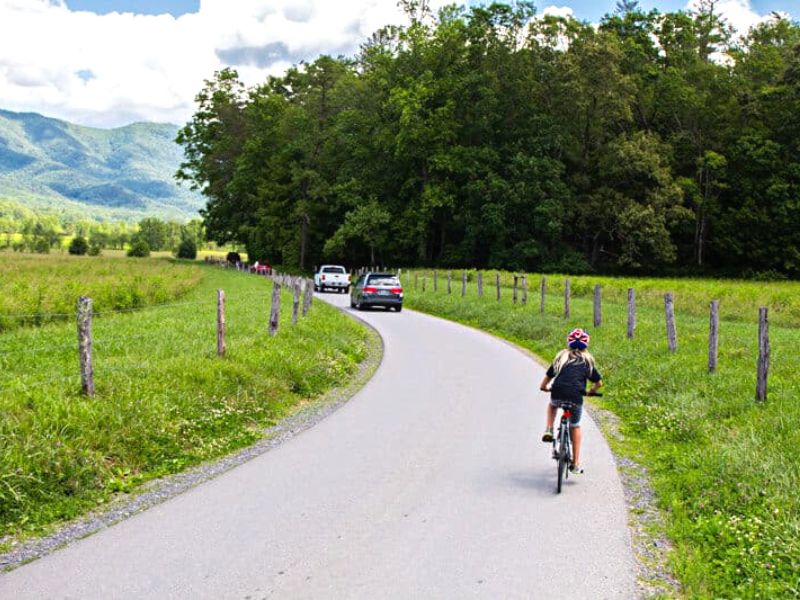
The Cades Cove Loop is our favorite thing to do in the Great Smoky Mountains. It’s located in an isolated valley in the Smokies and began as a seasonal hunting camp for the Cherokee Indians. It’s known for its forested scenery, bubbling creeks, and wildlife viewing opportunities.
The 11-mile road called Cades Cove Loop Road is a looped road that’s popular to cycle or drive around. Keep your eyes on the lookout for black bears (we saw some!), as well as white-tailed deer, raccoons, and wild turkey.
Along the way, you will see various 19th-century historic structures built by European Settlers, as well as a few walking trails. Park your car at the parking lot by Cades Cove Picnic Area and rent a bike from the store at the entrance to the Cades Cove loop road.
See the Cades Cove bike loop in action in the following video:
Stop 3: Hike to The Sinks

- Distance from previous stop: 17.7 miles
- Drive time: 45 minutes
- How long to spend there: 2 hours
Although The Sinks are actually between the Elkmont Historic District and Cades Cove, we recommend doing this after the bike ride as you can go for a swim in the river – and who wants to cycle with a wet bum?
The Sinks are heavily cascading waterfalls in the Townsend side of the Great Smoky Mountains National Park. The water rush is so powerful, it resembles a sink basin draining – hence the name.
There is a moderately challenging 3.5-mile out-and-back trail from the trailhead near Townsend to the cascades, which takes about 1 hour and 45 minutes to do.
It has a steady incline and about 18 creek crossings, but otherwise, it’s not too challenging and family-friendly. There may be a few tree roots, and there is also a swimming hole near the parking lot if you decide to cool off afterward. See the trail map here.
Stop 4: Blue Ridge Parkway via Newfound Gap

- Distance from previous stop: 47.5 miles
- Drive time: 1 hour 30
- How long to spend there: 1 hour
After a swim, it’s time to start making tracks back towards Asheville. Drive back towards Gatlinburg and turn off to drive along the Newfound Gap. As you drive along, you can stop off at any of the sites you missed the day before.
Some other overlooks you might want to stop off at are Campbell Overlook and Oconaluftee Valley Overlook, or stop for a picnic or a snack at Chimney Tops Picnic Area. Morton Overlook is also another favorite, especially for sunset. (Just be cautious of the nighttime driving after!)
Before you reach the end of Newfound Gap, just after the Oconaluftee Visitor Center, turn left onto the Blue Ridge Parkway. This is the south entrance of the 469-mile scenic drive that extends across the North Carolina mountains and into Virginia.
The section you will drive today is about 15 miles of that, but it’s stunning. Stop by the Oconaluftee River Overlook, Thomas Divide Overlook, and Big Witch Overlook for pretty views of the mountains. One of my favorite viewpoints on this stretch is , as you can see the folds in the mountains that look like scrunched-up paper.
This is a part of this itinerary that would be really amazing to do in the Fall as you can see the differentiation between the types of trees, which will be all different shades of red, oranges, and yellow this time of year. Drive slow, stop often, and admire the views.
Read more: How To Enjoy A Mountain Getaway to Roanoke from Raleigh: Escape To Virginia’s Blue Ridge
Stop 5: Soco Falls

- Distance from previous stop: 14.4 miles
- Drive time: 25 minutes
- How long to spend there: 30 minutes
At the end of the Blue Ridge Parkway, you’ll find Soco Falls. Soco Falls is a 100-foot, cascading double waterfall on the edge of the Cherokee Indian Reservation.
You won’t have to hike too far to see it. There is a viewing platform about half a mile from the turn-off. Note: keep your eyes on the lookout for the signpost directing you to the parking area. It’s tiny and easily missed.
Stop 6: Asheville or home

- Distance from previous stop: 39.8 miles
- Drive time: 45 minutes
After Soco Falls, it’s time to head either back to Asheville if you’re worn out and need a rest before driving back, or straight home to Raleigh.
If you power on to Raleigh, it’s a 4.5-hour drive, so I recommend you stay the night in Asheville and do the journey the next day.
Map of this 2-day itinerary for the Great Smoky Mountains
The following map shows the route we took on this 2-day itinerary, with each attraction plotted out.
NOTE – Google maps keeps rerouting around the 441 as the Blue Ridge Parkway and Newfound Gap are currently closed due to weather conditions. It should update to the correct route once they reopen for the spring.
More things to do in the Great Smoky Mountains
The following attractions we missed off the itinerary above due to time constraints (and also some of these things to do are not our vibe), but if you have more time, or perhaps want to come back, here are some other things to do in the Great Smoky Mountains.
1. Explore downtown Gatlinburg

As mentioned earlier, we’re not huge fans of the town of Gatlinburg, but that doesn’t mean there’s nothing of interest there to see and do – you just have to look past the touristy attractions.
One thing we liked about Gatlinburg was the distillery tour you can do there, which takes you around some of the region’s famous moonshine producers. See prices and availability here.
You can also ride up the Gatlinburg SkyLift for views of the Smokies (you’ll get better ones along the scenic drives) or play outdoors at the Anakeesta Adventure Park.
You can also visit Ripley’s Aquarium of the Smokies if you love aquariums and admiring aquatic creatures. This aquarium has over 1,000 creatures, a glass-bottom boat cruise, and mermaids.
2. Visit Pigeon Forge

Pigeon Forge is like Gatlinburg’s younger brother – it’s trying to be just like him, but taking it too far sometimes.
This mountain town is packed full of touristy souvenir stores, outlet malls, and amusement parks. In the center of the town is The Island in Pigeon Forge, which features a water fountain display, a Ferris Wheel, and numerous arcades. It’s like Vegas in the mountains but without casinos.
It’s also home to some quirky and niche museums, such as the Alcatraz East Crime Museum and the Titanic Museum, as well as the Hollywood Wax Museum. One of the biggest draws to visiting Pigeon Forge though is…
3. Get your thrills on at Dollywood

Dollywood is a family amusement park in Pigeon Forge that consists of a theme park with rollercoasters, a water park, and a dinner theater called Dolly Parton’s Stampede.
It’s named after country singer Dolly Parton, who grew up in the area, and also co-owns the park along with the Herchend Family. Dollywood has more than 50 rides and entertainment and is one of the 1op 50 most visited theme parks in the world.
4. Hike to Rainbow Falls

Rainbow Falls is another waterfall in the Smokies you might want to check out. These falls plunge for 80 feet, making them the longest plunging waterfall in the national park.
The trail to Rainbow Falls is moderately challenging, following LeConte Creek for most of the way. It has a few stream crossings and a couple of narrow footbridges but is otherwise not too challenging.
The trail is 5.4 miles, out and back, so it will take about 3.5 hours to complete. See the trail map here.
Where we stayed
There are two locations we recommend staying in on this weekend getaway from Raleigh; Asheville and Gatlinburg.
Asheville
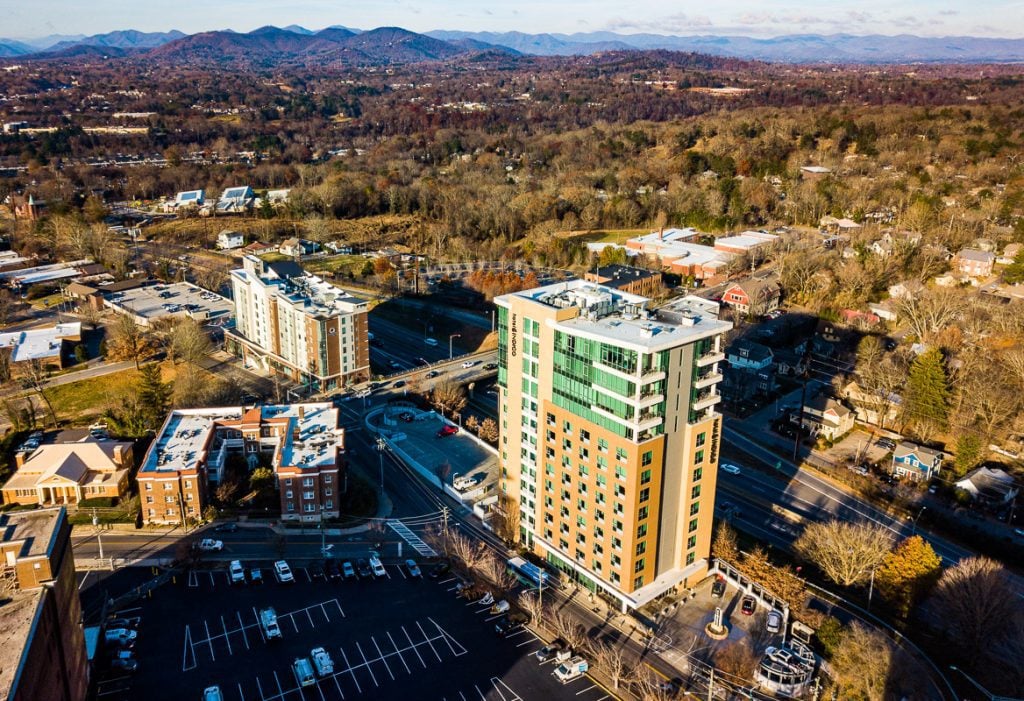
We stay at the Hotel Indigo Asheville Downtown when we visit Asheville and highly recommend it. See prices here. However, if you’re visiting for mountain vistas and want to escape the city, check out this treehouse, which looks amazing!
Here are more secluded retreat options in the mountain nearby and some of our favorite waterfront hotels in North Carolina (some nearby).
Gatlinburg

In Gatlinburg, the Westgate Smoky Mountain Resort & Water Park is one of the best places to stay for families because it has a waterpark, Wild Bear Falls Water Park, which is free for guests to use. This waterpark has a lazy river, multiple slides, and two pools. There’s also a game room and mini golf.
There’s also onsite dining (Westgate Smokehouse Grill) if you don’t want to go out to eat. Once the kids have gone to bed, have a cocktail at Mason Jar Lounge. Guests get their own villas to stay in with kitchenettes, living areas, and lots of space to move around. You can cook your own breakfast in your room, or even cook your own dinner. See prices.
Best time to visit the Great Smoky Mountains
The best time to visit the Smokies is from Spring until Autumn. Although the Smokies is considered open all year round, many of the hiking trails and scenic roads close in the winter due to weather conditions, so we recommend avoiding the winter months.
Tips for visiting the Great Smoky Mountains
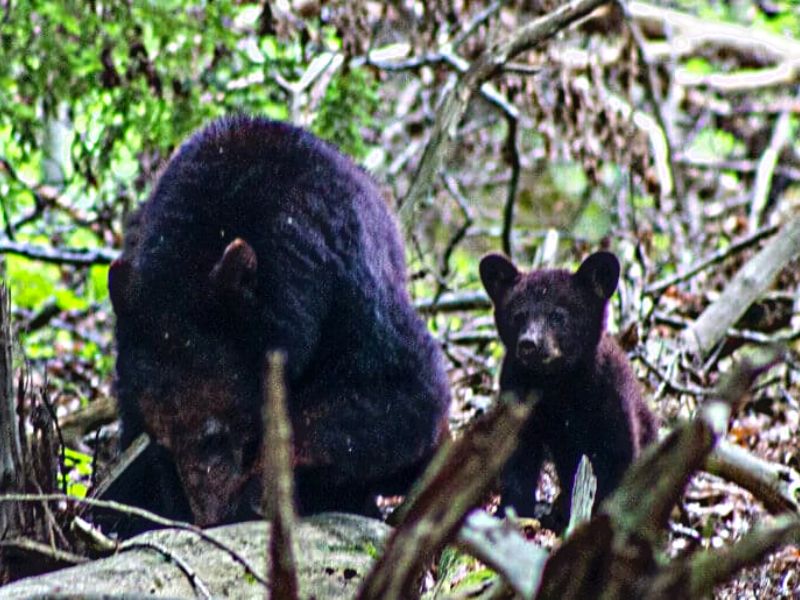
- Be bear aware. This is bear territory (especially Cades Cove) and they are wild and unpredictable. When you’re hiking on any trail in the Smokies, it’s possible to encounter American black bears. This is another good reason to pop into the visitor’s center before starting your trip so you can learn about bear safety.
- Check weather conditions. The weather can be interchangeable in the Smokies, even in the summer, so be sure to check the forecast before you set off.
- Bring clothing for changing weather conditions. Always pack for every eventuality. Rain, wind, sun. Come prepared.
- Take your trash with you. People leaving trash at parking lots and campgrounds is what attracts bears and other wildlife, which causes conflict with humans. Don’t be part of the problem and take all your trash with you.
- Be mindful of parking fees. The Smokies is free to visit but many of the parking lots you have to pay for. That’s how they get you!
- Bring bug spray. There are mosquitos active in early summer and late spring, and they are annoying!
You may also like nearby…
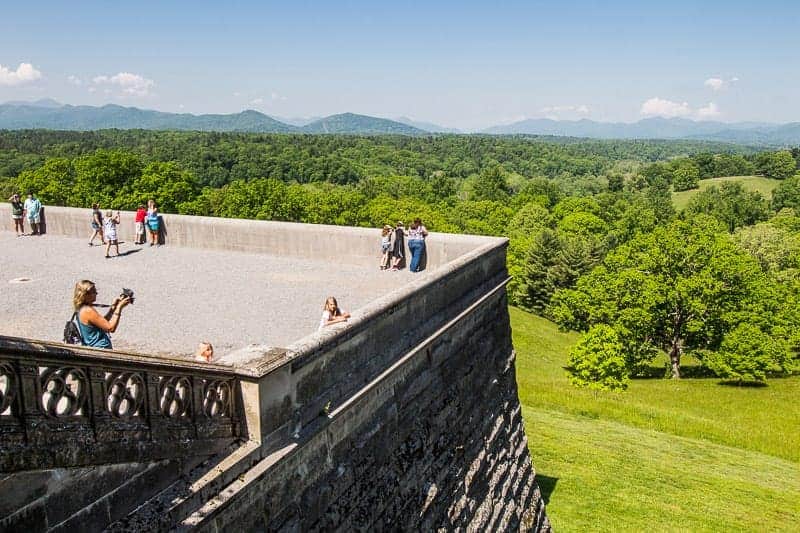
If you’re looking for an extended holiday to the Great Smoky Mountains, then you may also like to visit these nearby places:
Asheville: about an hour’s drive away from the Smokies, Asheville is an artsy town with a vibrant downtown area and an arts scene. Don’t miss the Asheville River Arts District, the Pinball Museum, and the lavish Biltmore Estate just outside the town. Read how to spend 48 Hours in Downtown Asheville NC.
Boone: about halfway between Raleigh and the Great Smoky Mountains is Boone, known for its scenic landscape in the Blue Ridge Mountains. Be sure to check out the Hickory Ridge Living History Museum. Read more about things to do in Boone here.
Lake Lure: known as the setting for Dirty Dancing, Lake Lure is a lovely lake-side town with watersports, hiking, and the Dirty Dancing Festival. (Lake Lure is currently closed due to Hurricane Helene. Let’s hope it opens soon as it’s one of my favorite places in the USA>
The Blue Ridge Parkway: This scenic drive extends from the Great Smokies all the way to Shenandoah National Park in Virginia, passing through 29 counties and extending for 469 miles. You can cover a small section of this on the way back towards Asheville, turning off Newfound Gap, but you can explore further if you have more time at your disposal.
Stay Connected to Raleigh
Join our free email community to receive free checklists, guides, insider tips, personal stories, fun finds, and the best events in Raleigh each week. We'll show you how to stay connected to Raleigh and love where you live! Join Below 👇
“Your weekly newsletter is a lifesaver for me. Yesterday we didn’t know what to do, I just check your list of events for the weekend, and we ended up in Cary at the Carolina Circus Festival. We had a great time so thanks a lot for all your good work 😊 we really appreciate you” Subscriber
